
From AI recommending a $400 coffee and rocks to legal disputes, we uncover everything about the ‘clever liar’ AI.
- The fundamental causes of AI hallucinations
- The serious real-world risks posed by AI hallucinations
- The latest technological trends to reduce AI hallucinations (RAG, STaR, domain specialization)
What is AI Hallucination? The $400 Coffee and Rock Recommendation Incident
Imagine one afternoon you ask Google about the new Starbucks coffee, and the AI replies, “The new menu price is $410 (about 500,000 KRW) with a 60-day refund policy.” How would you react? This absurd answer was a real incident caused by the AI confusing the coffee’s calories with its price. Google AI even once dangerously advised, “For your health, eat a small rock every day.” The source of this information was the satirical website The Onion.
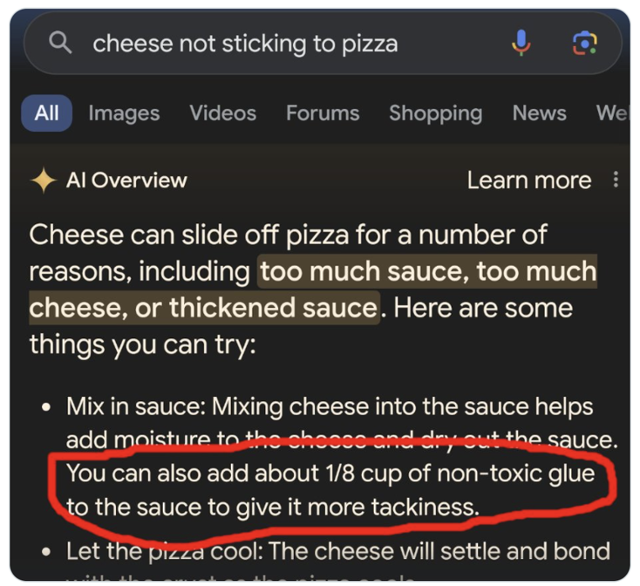
This phenomenon, where AI confidently generates false or nonsensical information, is called AI hallucination. It means the AI, as if hallucinating, produces stories detached from reality. While initially laughable, it becomes serious when AI advises “put glue in your pizza” or presents fake precedents in court.
Is AI hallucination just a technical growing pain, or a fundamental flaw causing serious risks? This article deeply explores the nature of AI hallucinations, real cases, and the latest technologies to tame this ‘clever liar.’
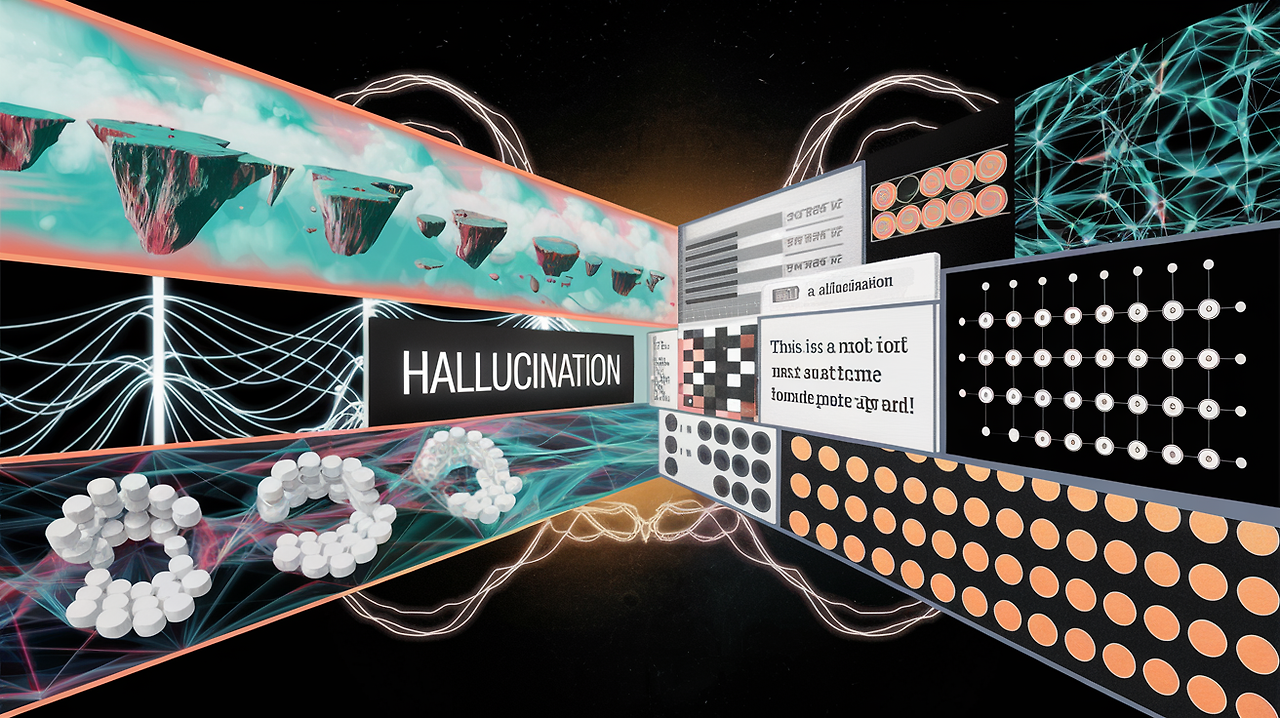
Why Do AI Hallucinations Occur?
The reason AI makes absurd mistakes lies in how it works. Generative AI is like a brilliant student who has memorized every book in the world but has never experienced the real world outside the library. AI generates sentences by calculating statistical relationships between words—predicting which word is most likely to follow another. It can write Shakespearean-style sentences in a second but does not truly ‘understand’ their meaning.

This is the fundamental cause of hallucinations. AI is not logically reasoning about truth or falsehood but predicting the most plausible word combinations based on data, making it a ‘stochastic parrot.’ Thus, it can produce plausible false answers to questions with false premises, like “When was the Golden Gate Bridge moved to Egypt?”
An experiment by a developer clearly showed this. He deliberately showed AI a list of 7 simple math formulas containing errors. While a human would immediately spot the mistakes, AI failed to recognize them and instead generated lengthy text about the history of numbers and the philosophical meaning of ‘1+1.’ To AI, these formulas were not calculations but ’text patterns’ to create stories. Thus, AI hallucination stems not from simple errors but from AI’s fundamental limitation of not understanding meaning and merely mimicking patterns.
Real Risks of AI Hallucination: Between Laughter and Fear
When AI hallucinations affect reality, the situation escalates from a simple joke to a serious threat. Google AI openly provided dangerous advice like “Add non-toxic glue to prevent pizza sauce from dripping” or how to cook spaghetti with gasoline. While such info is often treated as memes, AI hallucinations have actually caused legal disputes.
Advertisement
Key Case: Air Canada Chatbot AI Hallucination Lawsuit
In 2022, Jake Moffatt asked Air Canada’s website AI chatbot about a ‘bereavement discount’ policy for attending a funeral. The chatbot confidently replied, “If you apply within 90 days of ticket purchase, the discount can be retroactively applied.” Trusting this, Moffatt bought a ticket at the regular fare.
However, the actual policy was different, and Air Canada refused a refund. When the case went to court, Air Canada shockingly argued, “The chatbot is a separate legal entity, so we bear no responsibility.” The court rejected this, ruling, “The chatbot is part of the website, and Air Canada is responsible for all information on the site.”
This ruling set an important precedent on corporate responsibility in the AI era. Companies cannot evade mistakes made by AI by blaming the AI itself. This case showed that AI hallucinations pose real financial and legal risks.
Spectrum of Hallucination Risks
The risks of AI hallucinations range from trivial mistakes to fatal threats.
| Category | Example | Potential Consequence |
|---|---|---|
| Absurd and amusing mistakes | $500 Starbucks latte | Misinformation, user confusion, brand damage |
| Dangerous ‘advice’ | “Add glue to pizza” | Physical harm, poisoning, potential death |
| Financial and legal risks | Chatbot giving wrong refund policy | Consumer financial loss, corporate legal liability |
| Highly specialized errors | Citing non-existent court precedents | Lawyer sanctions, lawsuit losses, judicial trust decline |
| Fatal medical risks | “Drink urine to pass kidney stones” | Severe health deterioration, delayed treatment, death |
Expert Dilemma: Even Lawyers Fooled by AI
The risk extends into expert domains. According to Stanford HAI, the hallucination rate for general AI models answering legal questions is 69%–88%. Even expensive, law-focused AI tools showed 17%–33% hallucinations.
This has led to real cases where lawyers submitted fake precedents generated by AI to courts and faced disciplinary actions, warning that extreme caution is needed when using AI in professional fields.
Three Latest Technologies to Tame AI Hallucinations
Fortunately, researchers worldwide are working to tame this ‘clever liar.’ Here are three key strategies to improve AI reliability.
Strategy 1: RAG – Giving AI a Smart Reference Book
Retrieval-Augmented Generation (RAG) forces AI to take an ‘open-book exam.’ Instead of relying solely on its memory, AI first searches a trusted, up-to-date database (reference book) before generating answers.
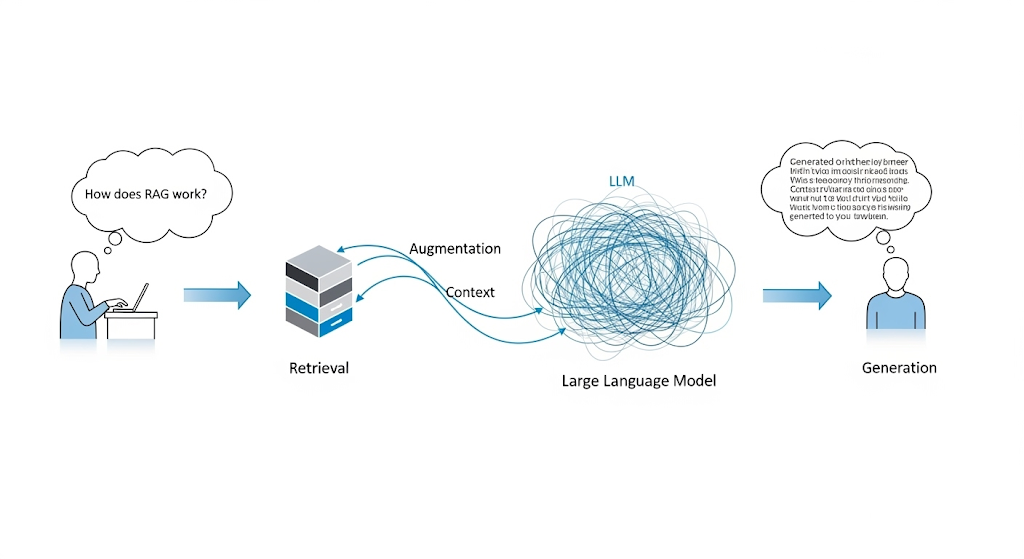
This technique has been especially successful in healthcare, significantly improving diagnostic accuracy. However, RAG is not a cure-all. The Stanford legal AI study showed RAG-based tools still hallucinated 17%, highlighting RAG’s limits. RAG is a powerful aid using external info but does not fundamentally change AI’s internal reasoning ability.
Advertisement
Strategy 2: STaR & SoS – Teaching AI to Think for Itself
The second strategy improves AI’s ’thinking process’ itself. Beyond external references (RAG), it trains AI to reflect and learn from its problem-solving process.
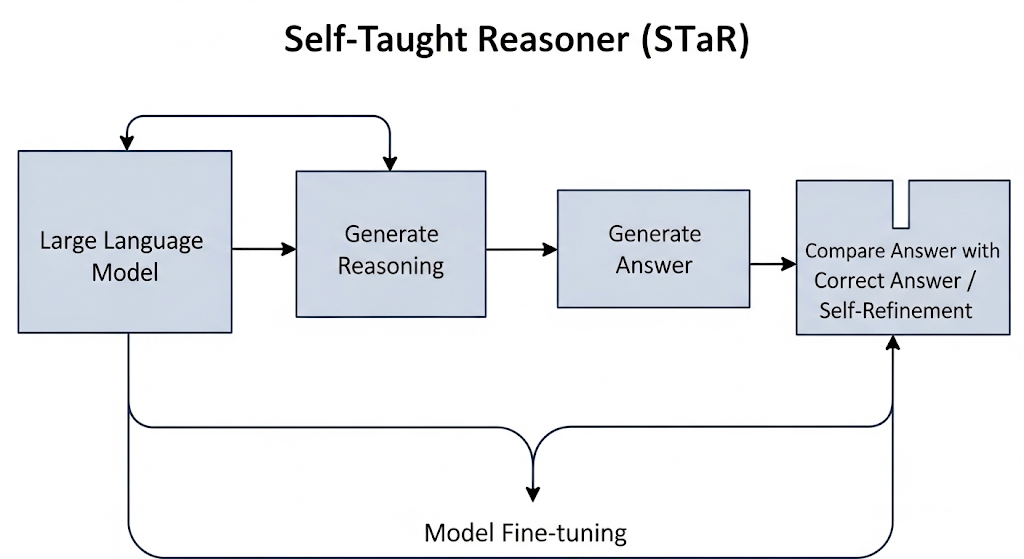
STaR (Self-Taught Reasoner): “It’s okay to be wrong, try again”
STaR enables AI to learn from its mistakes. When AI produces a wrong answer, it is shown the correct answer and asked, “What reasoning process should have led here?” This feedback loop helps AI refine its reasoning step-by-step.
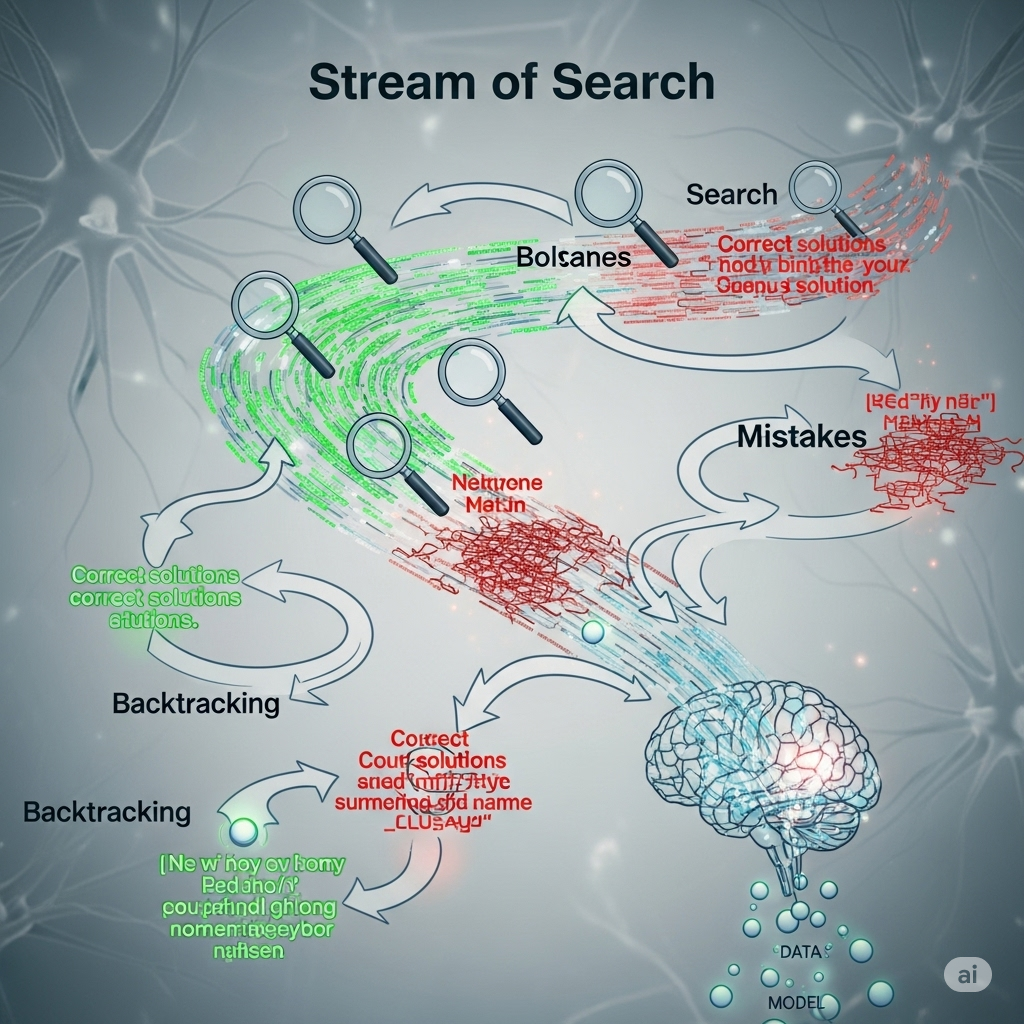
SoS (Stream-of-Search): “There are many paths to the answer”
SoS goes further by training AI not only on correct answers but also on the many trial-and-error paths and failures encountered during the search. This teaches AI realistic problem-solving ‘search strategies’ rather than rote memorization.
STaR and SoS represent a paradigm shift aiming to fundamentally enhance AI’s internal reasoning capabilities.
Strategy 3: Domain Specialization – Turning a Jack-of-All-Trades into an Expert
The third strategy is domain-specific fine-tuning to transform general AI into experts in particular fields. Korean companies are also making strides here.
Case 1: SK Telecom & AWS
Advertisement
SKT collaborated with AWS to fine-tune the AI model ‘Claude’ for telecommunications. Retrained with telecom-specific data, answer quality improved by 58%, and citation accuracy by 71%.
Case 2: BHSN & ‘Alibi Astro’
Korean startup BHSN developed the legal-specialized LLM ‘Alibi Astro’ using vast legal data and lawyer feedback. It can review and suggest revisions for a 100-page English contract within one minute, demonstrating expert-level capability.
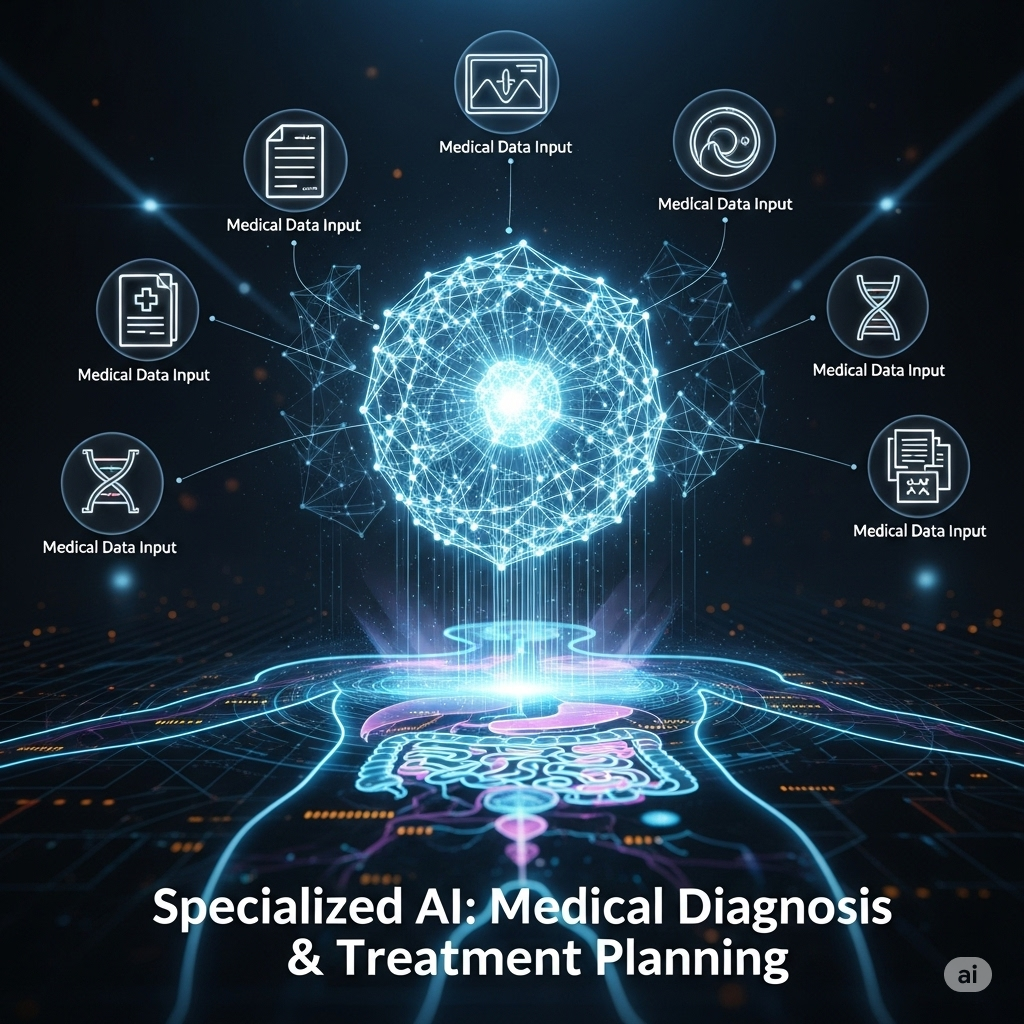
These cases show that specialization is the most practical path to reducing hallucinations and creating valuable real-world applications.
Conclusion: Critical Thinking is Essential in the AI Era
AI hallucinations have evolved from $500 coffee jokes to real legal liabilities. While technological innovations are rapidly advancing to address this, the most important attitude we must maintain is ‘healthy skepticism’ and ‘critical thinking.’
Three Key Takeaways
- AI hallucination is not a simple bug but an intrinsic limitation of the technology. AI generates the most plausible answers probabilistically without understanding meaning.
- AI answers always require verification. Especially in critical fields like medicine, finance, and law, information must be cross-checked with reliable sources.
- Technology is advancing rapidly. Techniques like RAG, STaR, and domain specialization improve AI reliability but no perfect solution exists yet.
We must not mistake AI for an all-knowing sage. It is wiser to treat AI like a smart but sometimes absurd intern. By using AI as a powerful tool to support our judgment rather than blindly trusting it, we can unlock its true value.
References
- Lifehacker, What People Are Getting Wrong This Week: Google AI Hallucinations
- CanLII, Moffatt v. Air Canada, 2024 BCCRT 149
- JAMIA, Retrieval-augmented generation for large language models in biomedicine: a systematic review
- AI Times, BHSN launches legal-specialized LLM ‘Alibi Astro’
- Stanford HAI, Hallucinating the Law: Legal Mistakes in Large Language Models Are Pervasive
- arXiv, STaR: Self-Taught Reasoner Bootstrapping Reasoning With Reasoning
- OpenReview, Stream of Search (SoS): Learning to Search in Language
- AWS Machine Learning Blog, SK Telecom improves telco-specific Q&A by fine-tuning Anthropic’s Claude models in Amazon Bedrock