
In May 2025, the Ministry of National Defense’s new policy raised not just a simple policy change but a fundamental question about how society views our sons placed in the special situation of ‘mandatory military service.’
- The history of the decades-old automatic promotion system based on “time served”
- The Ministry of National Defense’s rationale and criteria for introducing a “performance-based promotion system”
- Issues of unfairness due to assignments and physical conditions, and strong backlash from parents
- The process leading to a full policy review and remaining challenges
A Sudden Blow to Two Privates on the Same Day, Same Hour
On May 1, 2025, the atmosphere in a certain Army barracks was unusually heavy. Two newly assigned privates, Private Kim and Private Lee, had just received news of the Ministry of National Defense’s new abolition of automatic military promotion policy.
Private Kim, considered an “ace,” secretly saw an opportunity in the news of the “performance-based promotion system.” His heart raced at the thought of being recognized for his efforts, getting promoted faster than others, and receiving a higher salary. To him, this change seemed like the start of a rational reward system.
On the other hand, Private Lee, who struggled daily with tough kitchen duties as a cook, was filled with anxiety. Having time to train physically during personal maintenance was almost a luxury. To him, this news felt like the start of another form of discrimination and stigma rather than a fair evaluation. He worried about being left out of promotions, embarrassed in front of his peers, or being labeled a “slow learner.”
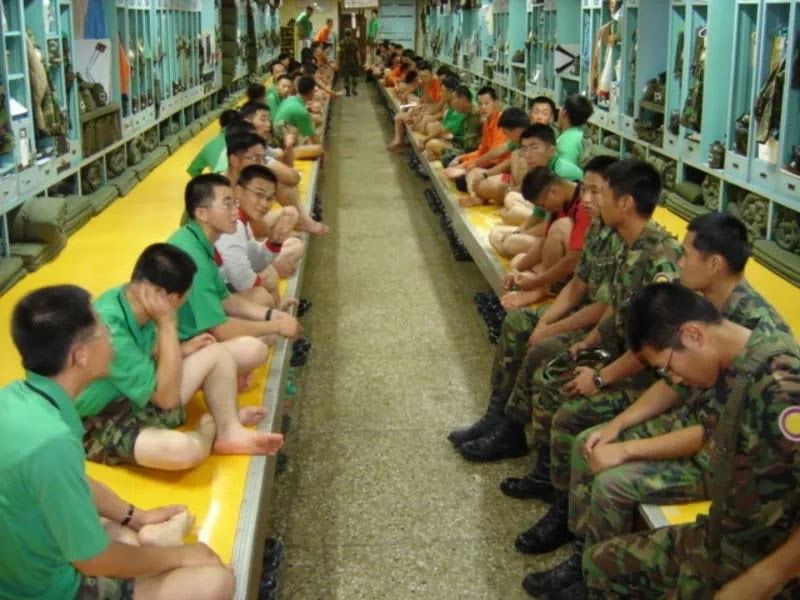
This is not just a story about a policy change. Under the noble cause of building a strong military, it is a story about a reality where a young man might only receive the sergeant rank one day before discharge, or someone might earn up to 2 million won less in salary than his peers. At the heart of this controversy lies a fundamental question about how our society views our sons in the special circumstance of mandatory military service.
Chapter 1: The Invisible Promise: When “Time Served” Was Rank
For decades, the South Korean military operated under an unwritten rule where rank and promotion were determined by length of service, symbolized by “time served.” Promotion over time was considered a natural part of military life.
This system was a kind of “invisible social contract.” For young men forced into military service, enduring difficult times, it guaranteed a predictable future where rank would rise over time, bringing some authority, responsibility, and honor. Promotion was seen less as a reward for outstanding performance and more as a minimal recognition for quietly fulfilling one’s duty over time.
Active-duty soldiers’ concern about “breaking the order” was more than just awkwardness over mixed seniority. Within the military, the unofficial hierarchy of “time served” operates as importantly as, or even more than, official rank. A situation where a junior soldier is promoted ahead of a senior undermines the informal training and command structure that supports the unit.
Ultimately, the automatic promotion system was not merely a personnel regulation but a cultural pillar ensuring stability and continuity in military life for decades.
Chapter 2: The Ministry of National Defense’s Rationale: A Military Where the Capable Advance
The Ministry’s reason for drastic change was clear: to strengthen combat readiness and establish a performance-oriented military culture. They aimed to break the complacent mindset of “just waiting to become a sergeant” and encourage soldiers to develop capabilities befitting their rank.
Advertisement

Spokesperson Han Jakyu emphasized that granting ranks to soldiers who possess the appropriate capabilities is a normal and rational measure.
The new promotion criteria included physical fitness, shooting, chemical/biological/radiological defense, and military conduct, with 70% of the evaluation score overwhelmingly weighted on physical fitness.
However, this was where a fundamental clash emerged. The Ministry’s and the public’s definitions of “fairness” were completely different.
- Ministry’s perspective: “Meritocratic Fairness” The logic that it is reasonable to give higher status and rewards to individuals who prove their abilities. Soldiers are considered “assets” contributing to combat power.
- Public’s perspective: “Conscript Fairness” As one active-duty soldier argued, “I didn’t come here by choice,” mandatory service is a forced sacrifice. Therefore, all soldiers who make the same sacrifice deserve equal respect, and introducing a competitive system is fundamentally unfair. Soldiers are “sons” the state must care for and protect.
Chapter 3: Ripples in the Barracks: The Tragedy of a “Tilted Playing Field”
The impact of the new system went beyond honor. The biggest issue was money. If a soldier repeatedly failed promotion evaluations, he could end up a “one-day sergeant”—only receiving the sergeant rank on the day of discharge.
This directly affected pay. Considering the 2025 monthly pay for a private first class (about 900,000 won) and a sergeant (about 1,500,000 won), the pay gap could reach up to 4 million won in total loss compared to peers who were promoted normally.
The most fatal flaw of this policy was ignoring the reality of a “tilted playing field” in the military.
- Disadvantages by assignment: It is nearly impossible for cooks or administrative soldiers working all day in the kitchen to find time to train physically like infantrymen.
- Individual physical conditions: With relaxed enlistment standards due to demographic decline, penalizing promotion based on physical or mental weaknesses was self-contradictory.
- Differences in working environments: Soldiers stationed in remote frontline areas have limited access to proper training facilities and time.
Ultimately, rank and pay were determined not by effort or will but by the luck of “assignment and physical condition,” resulting in an unfair outcome.
Chapter 4: Parents’ Revolt: “Don’t Burden Our Sons Like This”
Following the Ministry’s announcement, angry voices erupted mainly from parents who sent their sons to the military. The National Assembly’s public petition board became a forum condemning the “unfair system that lowers the morale of soldiers who answered the country’s call at their prime age.”
Some parents even suspected this was a “trick” to cut soldiers’ pay—the group least able to resist—to compensate for budget shortfalls.
Advertisement
The “one-day sergeant” clause was seen not as respect but as mockery. This was a critical communication failure by the Ministry, and the bureaucratic logic clashed with public sentiment, becoming a shackle that hindered the entire policy.
Chapter 5: Strategic Retreat: The Ministry of National Defense Bows to Public Opinion
The fierce backlash spread to the political arena, ultimately reversing the Ministry’s policy. On June 25, 2025, the Ministry announced a temporary suspension and full review of the strengthened soldier promotion evaluation plan.
In the National Assembly’s Defense Committee, lawmakers from all parties strongly requested reconsideration, and Acting Minister Kim Sun-ho announced, “Considering public petitions and parliamentary demands, I have ordered a temporary suspension and full review of the system’s implementation.”
This incident symbolized how parents’ voices, organized through public petitions and online communities, emerged as a new form of “power” in defense policy decision-making. The Ministry acknowledged it could no longer unilaterally decide policies without social consensus.
Comparison: Existing Automatic Promotion System vs. Revised Evaluation-Based Promotion
| Category | Existing Automatic Promotion System | Revised Evaluation-Based Promotion |
|---|---|---|
| Core Principle | Based on length of service (time served) | Based on capability evaluation (meritocracy) |
| Promotion Criteria | Completion of service period, no major unit disciplinary actions | Comprehensive evaluation including physical fitness (70%), shooting, military conduct |
| If Missed | Automatic promotion after up to 2 months delay | Possible indefinite omission (up to 15 months as private first class) |
| Rank at Discharge | Virtually all discharged as sergeants | Possibility of “one-day sergeant” |
| Pay Difference | Minimal | Up to about 4 million won difference compared to normal promotees |
Conclusion
Although the controversy over abolishing automatic military promotion has returned the policy to square one, it leaves us with three important questions:
- Balancing motivation and frustration: Is it possible to design a system that motivates the outstanding few without discouraging the majority of conscripts?
- Possibility of “fair” evaluation: Given the differing conditions of cooks and infantrymen, can a fair evaluation encompassing all soldiers truly exist?
- Meaning of soldier rank: Is a conscript’s rank a measure of combat power or a symbol of faithful duty fulfillment?
This incident was a collective reflection on what “military duty” should mean in a 21st-century democratic society. The Ministry of National Defense promised to find the “optimal solution,” but the journey to that answer has only just begun.
References
- SBS [Subtitled News] Only Private First Class for 15 Months? Ministry of National Defense Orders Full Review Amid Automatic Promotion Abolition Controversy
- Daum Today’s Info Understanding the Abolition of Automatic Soldier Promotion
- Pen & Mike [Editorial] Abolishing “Automatic Promotion”? What Does the Military Think of Men in Their 20s?
- Media News Automatic Soldier Promotion Abolished from May… Concerns Over Private First Class Discharge and Pay Loss
- Dong-A Ilbo Military Suspends Automatic Promotion Abolition Amid Concerns Over 15 Months as Private First Class
- Brunch Rank Is Not a Reward for Time: Soldier’s Responsibility, Soldier’s Qualification
- Segye Ilbo [Debate] Abolishing Automatic Soldier Promotion
- Tistory Changes in South Korean Army Soldier Service Period and Promotion Timing
- Chosun Ilbo “If Failed Promotion, Remain Private First Class”… Stir Over Abolishing Automatic Soldier Promotion
- Newsis Ministry of National Defense Temporarily Suspends Soldier Promotion System; Acting Minister Orders Full Review
- KBS News [Summary] “Rank by Time Served?” That’s Old News… Summary of Military ‘Automatic Promotion Abolition’ Controversy
- Namu Wiki Petition Against Soldier Promotion Omission System