
The Limits of Plastic: Why AI Has No Choice but to Choose the ‘Glass Substrate’
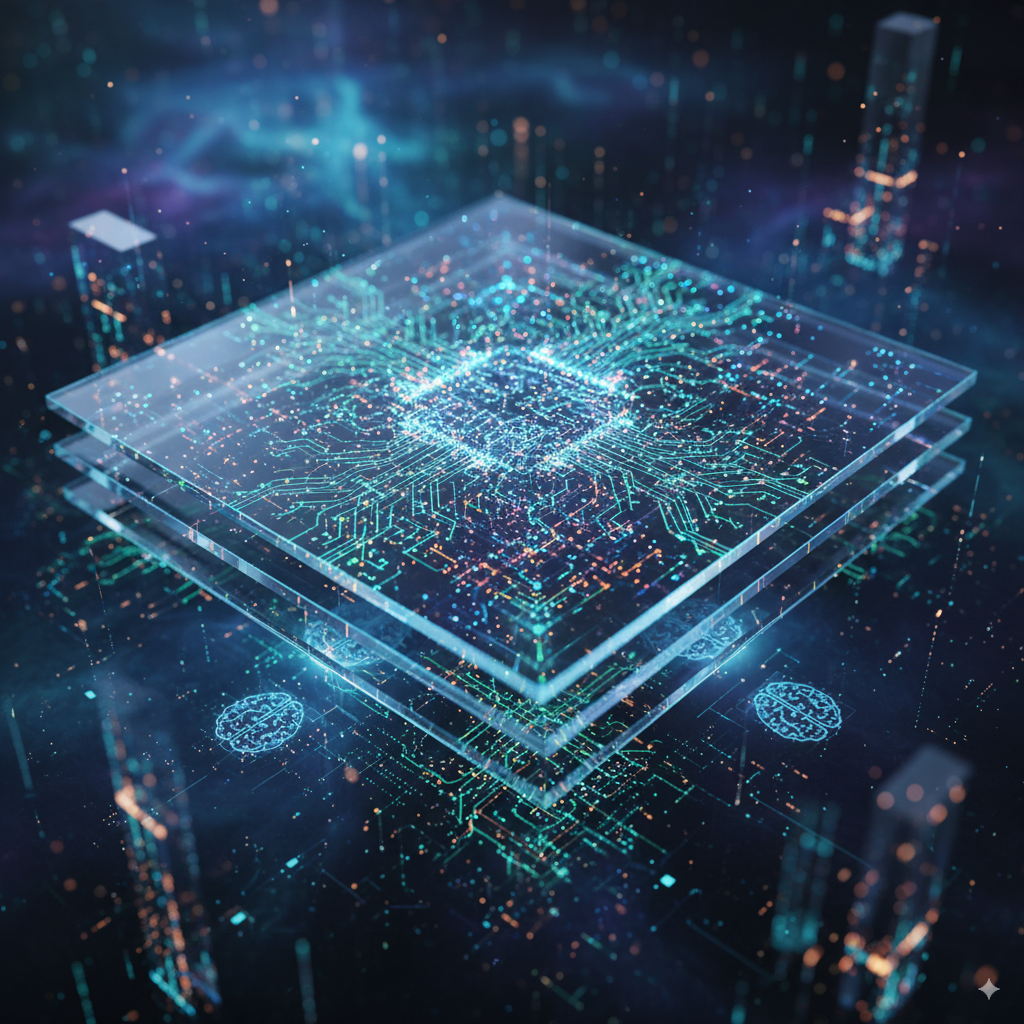
Would you believe that the future of all technology—from the smartphone in your hand to the AI in massive data centers—depends on a thin sheet of glass? Not the glass covering your screen, but the semiconductor glass substrate quietly preparing to change the world at the heart of semiconductor chips.
The AI revolution demands computational power beyond imagination, pushing existing semiconductor technology to its limits. It’s like trying to build skyscrapers on shaky ground—precarious and challenging. At this critical moment, the glass substrate emerges as a game changer that will overturn the entire field. This is not just a performance upgrade but a paradigm shift in semiconductor manufacturing, the key to making AI’s future a reality.
Why Semiconductors Have Hit a Wall: The ‘Soggy Pizza Dough’ Problem
First, let’s understand what a semiconductor substrate is. The substrate is the foundation and circuit board on which the semiconductor chip—the brain—sits. It supplies power to the chip and acts as a bridge for data exchange with the outside world. For decades, plastic-based ‘FC-BGA’ substrates have been the industry standard.
To make this easier to understand, imagine the substrate as the ‘dough’ of a pizza, and the semiconductor chips (CPU, GPU) or components like HBM as the ’toppings.’ If past semiconductors were like a cheese pizza, today’s AI semiconductors are like a ‘super deluxe combination pizza’ piled high with toppings.
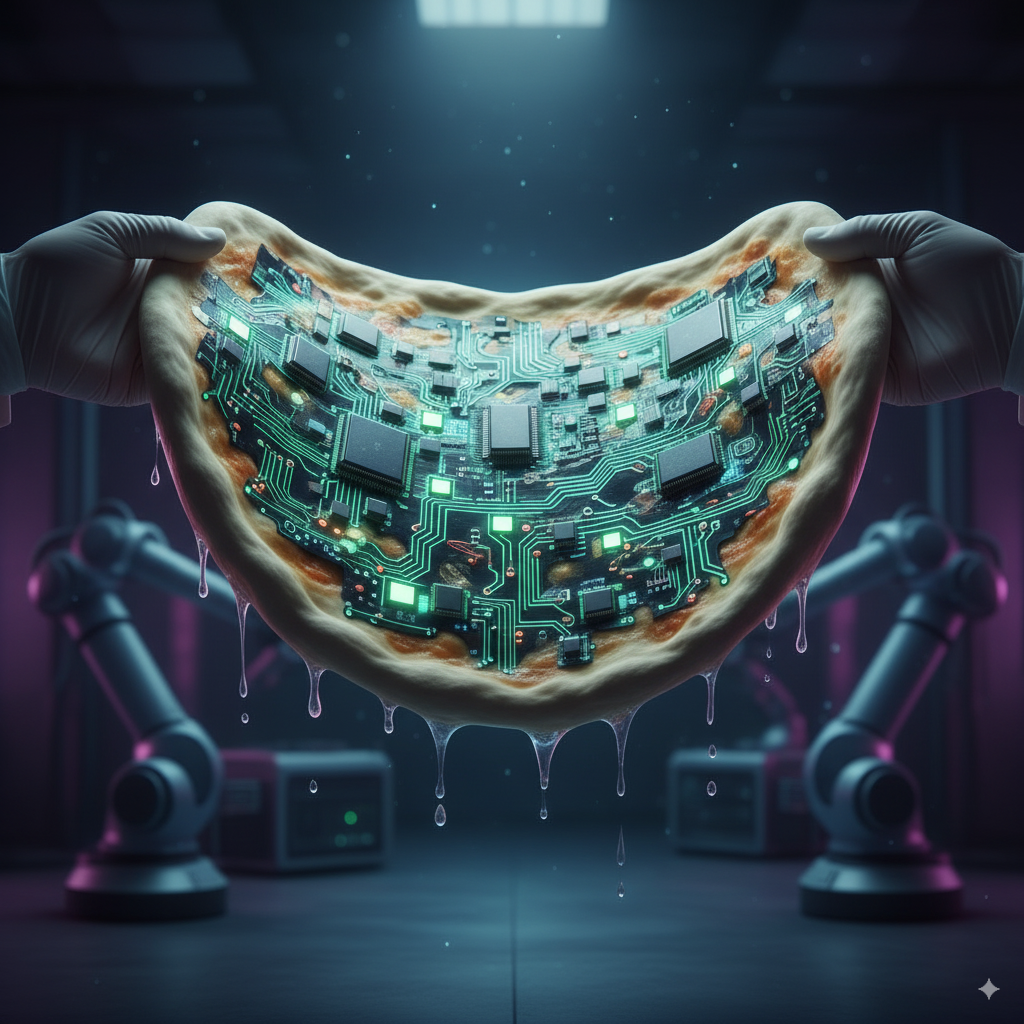
The problem is that the plastic dough cannot withstand the weight and heat of all these toppings and warps. This is known in the industry as warpage, a critical defect. Just as toppings slide off a warped dough, when the substrate warps, tens of thousands of tiny connection points misalign, causing semiconductor defects. This physical limitation threatens Moore’s Law and is the biggest obstacle holding back the AI era.
The Game Changer Arrives: Four Amazing Powers of Glass Substrates
The perfect alternative to soggy pizza dough is the ‘stone baking surface’ that withstands intense heat—the glass substrate. Glass has four ‘superpowers’:
1. Super Flatness: A Perfect Canvas
Unlike crumpled paper, glass is a perfectly flat canvas. This allows for much finer and more precise circuit patterns than plastic. In other words, it enables more data highways in the same space, dramatically increasing communication speeds between chips.
2. Thermal Stability: Unwavering Strength
Unlike plastic containers, glass does not deform at high temperatures. Glass has a very low coefficient of thermal expansion (CTE), so it barely warps even under the hot conditions of semiconductor processing. This fundamentally solves the warpage problem. Moreover, the CTE of glass can be matched almost exactly to that of silicon, the chip material, minimizing stress from temperature changes and maximizing semiconductor reliability.
Advertisement
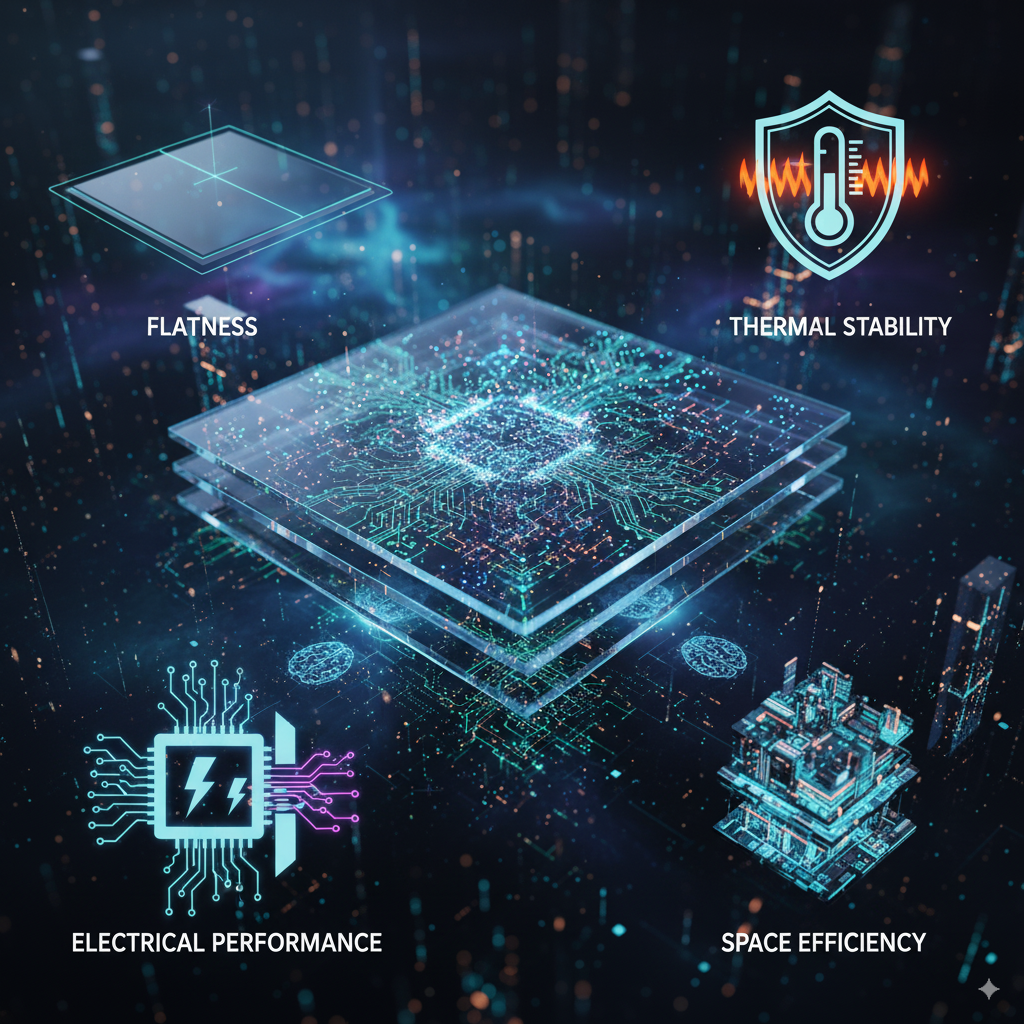
3. Electrical Prowess: The Data Superhighway
Glass is an excellent insulator, reducing signal interference and leakage significantly. As a result, data transmission speeds can increase by up to 40%, while power consumption drops by more than 30%. This plays a decisive role in maximizing AI semiconductor performance and reducing power usage in data centers.
4. Space Efficiency: Smaller and More Powerful
Like hiding all piping inside walls in modern buildings, glass substrates can embed ultra-small components like MLCCs directly inside the substrate. This frees up surface space to place more chips or drastically reduce the overall package thickness, enabling thinner and more powerful device designs.
Turning Dream Technology into Reality: The Huge Barriers to Commercialization
If glass substrates are so perfect, why are they only gaining attention now?
The reason is that handling glass at the micrometer (μm) scale is far more difficult than imagined.
It’s like drilling tens of thousands of holes thinner than a hair into a premium wine glass without a single scratch. This technology is called TGV (Through-Glass Via), and the biggest challenge is invisible micro-cracks that form during drilling. These tiny cracks can later destroy the entire substrate.

Additionally, the enormous investment required to abandon all existing plastic process equipment and build new production lines is a major barrier.
The Invisible War: The Glass Substrate ‘Game of Thrones’
Because of this enormous potential, a fierce ‘Game of Thrones’ is raging behind the scenes.
- Pioneer Intel: Investing over $1 billion, aiming for commercialization before 2030 to secure market leadership.
- Aggressive Challenger SKC (Absolics): Through its subsidiary Absolics, moving quickly with major clients like AMD to achieve the world’s first commercialization.
- Manufacturing Powerhouse Samsung Electro-Mechanics: Leveraging strong manufacturing expertise, rapidly pursuing mass production by 2027.
The ultimate winner will be the company that establishes its technology as the industry standard. This is a massive battle shaping the future blueprint of next-generation semiconductor packaging.
Advertisement
The Transparent Glass That Will Shape Our Future
Semiconductor glass substrates have the potential to dramatically transform our lives.
- More Powerful Devices: Thinner, lighter, longer-lasting laptops and smartphones, enabling games with graphics indistinguishable from reality.
- Smarter AI: Accelerating the arrival of AI models hundreds of times more powerful than today.
- True Autonomous Driving: Becoming the core technology for autonomous vehicles that make life-or-death decisions in real time.
- Sustainable Technology: Reducing the massive power consumption of AI data centers, offering an eco-friendly alternative.
Market experts predict the first commercial products will appear around 2026, with widespread adoption expected by 2030.

Our Future Built on a Transparent Foundation
We have journeyed from the limits of soggy pizza dough to the future unlocked by the ‘perfect canvas’ of glass substrates. Glass substrates are not just a component replacement but an essential paradigm shift supporting the AI era.
Though technical barriers remain high, the rewards beyond them are so great that humanity’s challenge will not cease. Next time you look at a glass window, think about this: the true potential of glass is not the view beyond it, but the new digital world invisibly built upon it.
<b>References</b>
- Semiconductor ‘Dream Substrate,’ an Irresistible Trend (Fortune Korea)
- ‘Glass Substrate’ Commercialization War Begins with AI Boom (News Tomato)
- Glass Substrate Era Arrived Faster Than Expected… AI Semiconductor ‘Game Changer’ (Chosun Biz)
- Samsung, SK, Intel Open Wallets: What Is Semiconductor Glass Substrate? (Seoul Economy)
- The Core of AI Semiconductor Innovation, the Future Changed by ‘Glass Substrate’ (Viewers)
- Through Glass Via (TGV Technology), What Is a Glass Substrate? (SEMI X DATA)
- Essential for Semiconductor Substrates and Data Centers… Glass Rises in AI Era (Chosun Ilbo)
- Glass Substrate (SKC)
- Commercialization Hurdles of Semiconductor Glass Substrates: ‘Glass Processing’ (Electronic Times)
- Samsung Electro-Mechanics’ Jang Deok-hyun: Will AI Boom with Glass Substrate, Overcoming Technical Limits and Intensifying Competition (Business Post)
- Semiconductor Glass Substrate Supply Chain Analysis Report (Brunch)
- Why AI Industry Focuses on Semiconductors Made of ‘Glass’ (SisaWeek)
- The Blossoming Market of ‘Glass Substrates’ That Will Decide Future Semiconductor Packaging (Electronic Times)
- Glass Substrate Potential and Investment Opportunities Leading AI Semiconductor Era (Goover)
- Opening of Semiconductor Glass Substrate Era… AMD Builds Supply Chain with Korean Materials and Equipment (Electronic Times)
- The Key to AI Semiconductor Advancement, Glass Substrate Rises (Smart Tech Korea)
- Glass Substrate Market – Size, Share, and Industry Analysis (Mordor Intelligence)
- Global Glass Substrate Market Size, Share, and Trend Analysis (Data Bridge Market Research)