
The General’s Return Home: How Heavy Was the Weight in a Bowl of Jang Flavor?
- History and Cultural Significance of Jang: Understanding the value of jang as more than just food, but as a symbol of a family’s well-being and history.
- The Science of Fermentation That Determines Jang Flavor: Exploring the remarkable microbial activity inside meju blocks and jars.
- Various Traditional Jang Types and Modern Changes: From regionally distinctive jang to today’s factory-produced soy sauce.
Jang (醬), Beyond a Simple Seasoning
General Kim Yushin of Silla was about to face a decisive battle against Baekje. As he led his troops out, his path coincidentally passed by his own home. Though he had not seen his family for a long time due to prolonged wars, the general, focused on unifying the Three Kingdoms, could not be swayed by personal feelings.
Holding the reins, he passed by his house but sent a subordinate to fetch a bowl of jang (醬) from home. Moments later, tasting the jang, a faint smile appeared on Kim Yushin’s face. The flavor had not changed at all. From that consistent taste, he confirmed his mother’s health and the family’s peace, and with a steady heart, he headed to the battlefield.
I believe this anecdote symbolically shows what Korean traditional jang means to Koreans. It was a measure of a family’s well-being and order, and a spiritual connection linking family members’ hearts. The process of making and managing jang was a year-round, arduous, and precise labor; without peace and diligence at home, good flavor could never be maintained.
Thus, unchanging jang flavor was the surest sign that the household was safe, providing the general with psychological stability greater than any message. Korean soy sauce and doenjang were more than food ingredients—they were vessels containing a family’s history, spirit, and ultimately, the soul of a nation.
Origins of Korean Jang: Embracing a Millennium of History
Fermentation culture on the Korean Peninsula runs very deep. One of the oldest records of jang is found in the 3rd-century Chinese historical text, the “Records of the Three Kingdoms” (Sanguozhi), in the “Wei Book, Dongyi Biography.” It notes that the Goguryeo people were skilled at “jangyang (藏釀),” referring broadly to techniques for making fermented foods like jang and alcohol.
However, the definitive record clarifying Korean jang’s identity dates back to the Silla period. According to the “Samguk Sagi,” in 683 AD, when King Sinmun married Kim Heum-un’s daughter, the wedding gifts included both jang (醬) and si (豉).
‘Jang (醬)’ and ‘Si (豉)’: The Beginning of Originality
The fact that ‘jang’ and ‘si’ were listed separately in King Sinmun’s wedding gifts is a crucial clue to understanding Korean jang history.
Here, ‘si (豉)’ refers to fermented soybean blocks—the prototype of today’s meju—a solid fermented product, while ‘jang (醬)’ encompasses the liquid (soy sauce) extracted by soaking ‘si’ in brine and the remaining solids (doenjang).
This is the earliest documentary evidence that the uniquely Korean method of producing both liquid and solid seasonings from one fermentation process was already established over 1,300 years ago during the Silla era.
Jangdokdae: The Sacred Space of the Household
Traditionally, one of the most important places in a Korean home was not the kitchen or main room, but the jangdokdae (fermentation jar stand). Located in the sunniest, most ventilated spot, the jangdokdae was more than a storage place—it was a sacred altar praying for the family’s peace and prosperity.
Advertisement
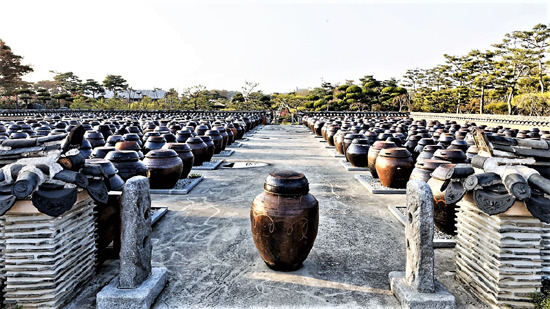
Neatly arranged in a sunny place, the jangdokdae symbolized the family’s peace and prosperity.
Jang Making: A Traditional Ritual Embracing Science
Making jang was not a simple cooking process but a ritual governed by strict taboos and procedures.
- Choosing an Auspicious Day: Jang was never made on just any day. The lunar calendar was consulted to select an auspicious day like ‘Malnal (午日),’ when all things thrive.
- Protective Rituals with Geumjul (Sacred Rope): The jar was wrapped with a sacred rope twisted to the left, threaded with red chili peppers, charcoal, and white paper. This signified jang’s sacredness, protecting it from evil spirits and contamination.
- Purification of Body and Mind: The person making jang had to purify themselves, avoid entering mourning houses or places of conflict, and refrain from harsh speech.
The resulting flavor was seen as a prophecy of the family’s fortune. Proverbs like “A talkative house has bitter jang” and “If the jang flavor changes, the household declines” reflect how jang flavor and family fate were intertwined.
Remarkably, from a modern scientific perspective, these sacred customs were rational microbial management methods. Choosing clear days and using geumjul to block outsiders effectively prevented harmful bacteria growth and cross-contamination.
The Science Inside the Jar: Secrets of Korean Traditional Jang
The deep, complex flavors of Korean jang result from the miraculous microbial activity inside the jar—an alchemy called fermentation.
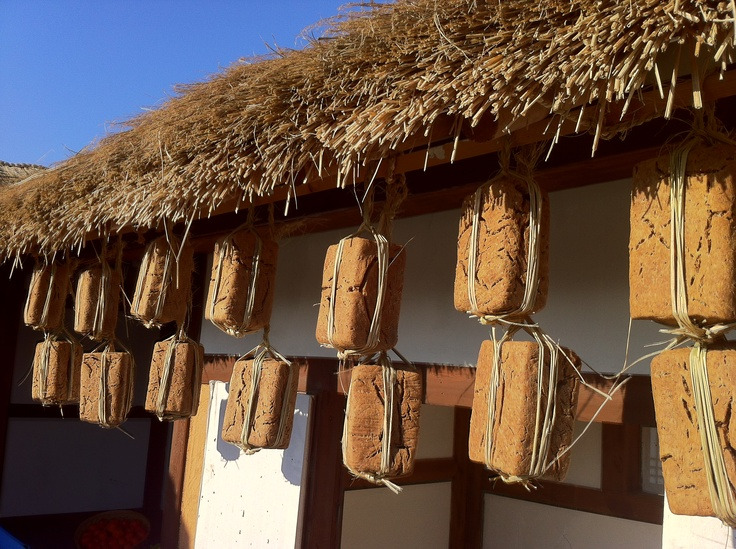
Meju, naturally fermented with microbes from rice straw and air, is the core of Korean jang flavor.
From Soybeans to Meju: Collaboration of Natural Microbes
The first step in jang making is boiling soybeans thoroughly and pounding them into blocks called ‘meju.’ These are tied with rice straw and hung under eaves, where wild molds and Bacillus subtilis from the straw settle on them.
This microbial community, especially Aspergillus oryzae and Bacillus subtilis, produces powerful enzymes that break down soybean proteins into amino acids and carbohydrates into sugars.
Advertisement
After months in brine jars, the dark liquid extracted becomes soy sauce, and the remaining solids are mashed and aged separately into doenjang.
This ‘wild fermentation’ creates unique microbial environments in each household, akin to the ’terroir’ concept in winemaking, where soil and climate shape flavor. The saying “Every household’s jang tastes different” is scientifically accurate.
Regional Jang: A Symphony of Diverse Flavors
Korean jang has evolved into diverse varieties reflecting local climates and specialties. Which jang do you prefer?
- Eoyukjang (Fish and Meat Jang): A royal court delicacy from the Joseon era, layered with precious ingredients like beef, pheasant, and fish alongside meju.
- Makjang: A fast-fermented jang made by grinding meju and mixing it with barley or wheat, popular in Gyeongsang and Gangwon provinces.
- Cheonggukjang: A quick-fermented jang made by fermenting whole boiled soybeans for 2–3 days, known for its strong aroma and health benefits.
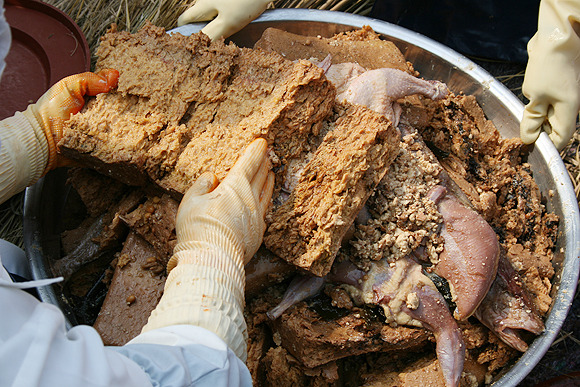
Eoyukjang, made with beef and fish, boasts a deep and rich umami flavor.
Jeju’s Treasure: The Story of Blue Soybean Jang
Jeju’s ‘Blue Soybean Jang’ is a special story born from native resources and artisans’ efforts. Made from the native ‘Blue Doksaegi Bean,’ it is sweet and chewy. Nearly lost, it was revived by artisans and registered in 2013 on the International Slow Food Foundation’s ‘Ark of Taste.’
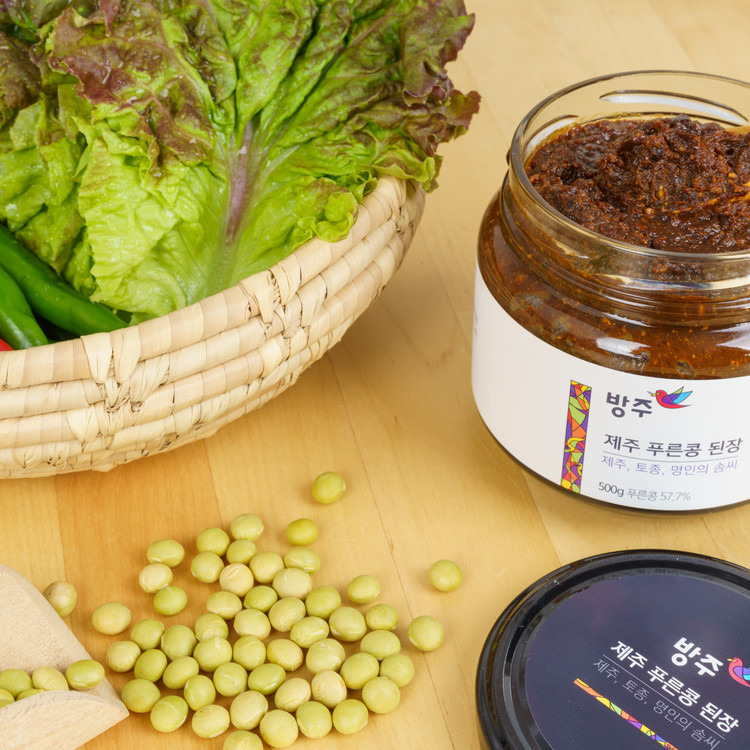
Made from Jeju’s native ‘Blue Doksaegi Bean,’ this jang is a precious culinary heritage of Jeju.
Modern Jang: At the Crossroads of Tradition and Industry
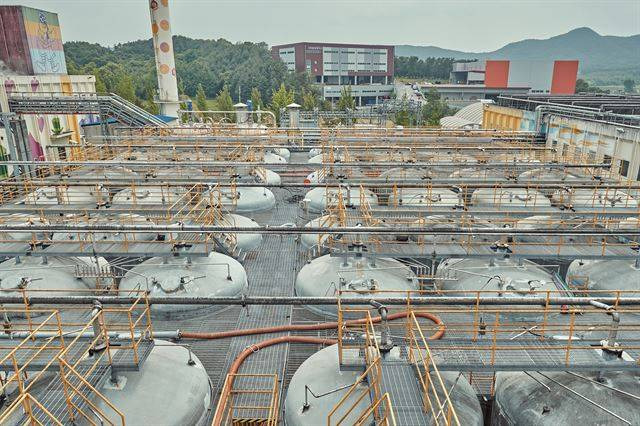
Today, most jang on our tables is produced through modern industrial processes. Using pure cultured strains in controlled temperature and humidity environments, factories produce large quantities of consistent-quality jang year-round.
Advertisement
Modern factory equipment enables mass production of jang with uniform quality.
Comparison / Alternatives
East Asian Soybean Fermented Seasoning Comparison
Korean jang differs distinctly from Chinese and Japanese methods by producing soy sauce and doenjang simultaneously from one meju block.
| Feature | Korea (Jang, 醬) | Japan (Miso, Shoyu) / China (Doubanjiang, etc.) |
|---|---|---|
| Main Products | Soy sauce (liquid) and doenjang (solid) simultaneously | Japan: Shoyu (liquid), Miso (solid) separately |
| China: Soy sauce (liquid), Doubanjiang/Doushi (solid), etc. | ||
| Key Ingredients | Soybeans, salt, water | Japan: Soybeans, salt, water, koji (cultured rice/barley) |
| China: Soybeans, salt, water plus wheat flour, chili, etc. | ||
| Production Method | Uses meju (naturally fermented soybean blocks) | Japan: Koji mixed with boiled soybeans for fermentation |
| China: Various methods, often direct inoculation |
What Makes Store-Bought Soy Sauces Different?
Soy sauces commonly found in stores vary in taste and use depending on production methods.
| Type | Main Characteristics | Recommended Uses |
|---|---|---|
| Korean Soy Sauce (Joseon Soy Sauce) | Made only with soybeans, salt, water. Light color, strong salty and savory taste. | Soups, stews, vegetable seasonings |
| Brewed Soy Sauce (Japanese-style) | Uses koji made from soy and wheat. Dark color, rich sweetness and umami. | Sashimi, pancake sauces, braising, stir-fry |
| Acid-Hydrolyzed Soy Sauce | Protein broken down by hydrochloric acid. No fermentation flavor, inexpensive. | |
| Mixed Soy Sauce | Blend of brewed and acid-hydrolyzed soy sauce. | Check brewed soy sauce content carefully. |
Checklist or Step-by-Step Guide
Core 3 Steps of Traditional Jang Making
- Making Meju (Late Autumn): Boil soybeans thoroughly, pound into blocks, tie with rice straw, and ferment in a well-ventilated place for 2–3 months.
- Making Jang (First Lunar Month): Wash fermented meju, place in a jar filled with brine, and float charcoal, chili peppers, and jujubes.
- Separating and Aging Jang (After 40–60 days): When brine turns dark soy sauce, remove meju, mash it to age as doenjang, and boil soy sauce for storage.
Conclusion
From the story of Silla’s General Kim Yushin to today’s smart factories, Korean traditional jang is not just a seasoning but the embodiment of our nation’s history and wisdom.
- Jang is science: It is the product of ancestors’ sophisticated empirical understanding and management of microbial activity.
- Jang is culture: The sacredness of jangdokdae and the ritual of jang making reflect Koreans’ worldview of living in harmony with nature.
- Jang is history: The unique flavor of each household’s jang is a living record of family tradition and history.
Today, we easily consume factory-made, fast, and uniform jang, but what might we be losing in convenience? Perhaps it is the depth created by time, nature, and human devotion—the ’taste of time’ imbued with a nation’s soul.
Now, how about taking another look at the soy sauce and doenjang on your dining table? Feel the long story contained within.
References
- Soy Sauce Namu Wiki
- [Manmulsang] Chinese-made Doenjang and Gochujang Chosun Ilbo
- [Taste Stealer] Who Originated Doenjang: Korea, China, or Japan? Chosun Ilbo
- Recommended by Curator Ahn Jung-yoon National Folk Museum
- Korean Taste, Traditional Jang / YTN DMB Youtube Link
- History of Jang Korean Soybean Research Association
- Factory-made Doenjang with Miso Production Method Regional N Culture
- Learn Traditional Jang Making OhmyNews
- Soy Sauce (간醬) Encyclopedia of Korean Culture
- Geumjul (Sacred Rope) Korean Folk Encyclopedia
- Proverbs / South Korea Namu Wiki
- Fermentation Science in Doenjang / YTN Science YouTube
- Doenjang Production Methods by Type, Root of Korean Food Lampcook
- Diversity of Bacillus Groups Isolated from Soybean Fermented Foods and Their Cheonggukjang Fermentation Characteristics Korean Journal of Food Preservation and Distribution
- Korean Fermented Foods Gaining Global Attention MICHELIN Guide
- Jeju Blue Soybean Jang Registered in 2013 Lampcook
- [Puzzle] Disappearing Jeju Blue Soybean Jang… Tried Drinking It Diluted in Cold Water JoongAng Ilbo
- A Good Day to Read Korean Food Korean Food Promotion Institute
- Delicious Doenjang Farm Trip… Searching for Jeondok Soy Sauce, Eogan Soy Sauce, Eoyukjang Pressian
- Doenjang Namu Wiki
- Cheonggukjang Namu Wiki
- Confused About Soy Sauce Types? SisaIN