
How did the 1,500-year-old Shaolin Temple become the epicenter of a complex confrontation involving faith, wealth, and state power?
- Comparing the contrasting visions of the ‘CEO Abbot’ and the ‘Reformer Abbot’
- Analyzing the core of the ’exodus’ incident where over 30 monks left
- Exploring the impact of the “Sinicization of Religion” policy on Shaolin Temple
Shaolin Temple at a Crossroads After 1,500 Years of History
In a deep valley of Songshan Mountain, Henan Province, China, the 1,500-year-old Shaolin Temple (少林寺) is enveloped in unfamiliar silence. Once bustling with tourists and martial arts practitioners worldwide, it has transformed into a place dominated by strict discipline and hard labor. At the heart of this dramatic change lies the downfall of one abbot and the rise of another. This upheaval triggered an exodus of over 30 monks leaving the temple.
This event goes beyond a mere internal personnel issue; it signals the end of one era and the beginning of another. The era of the ‘CEO Abbot’ who built Shaolin into a global brand worth billions of yuan has ended, giving way to a traditionalist reformer who emphasizes farming and meditation.
Is this a spiritual revival aimed at purifying a corrupt temple, a corporate restructuring of a secularized institution, or a politically motivated purge orchestrated by powerful state forces? This article delves deeply into the clash of two visions over the soul of Shaolin through the stories of the two abbots.
‘CEO Abbot’ Shi Yongxin: Building Shaolin’s Commercial Empire
Modern Shaolin history is inseparable from Shi Yongxin (釋永信). His rise marked the transformation of a temple recovering from the Cultural Revolution’s scars into a global commercial empire generating over 1 billion yuan (approx. 193 billion KRW) annually.
The Emergence of a Modern Abbot
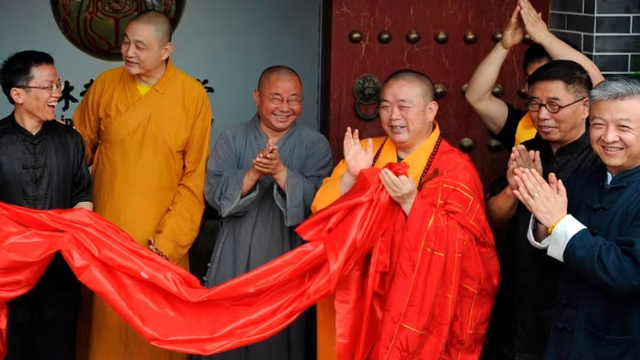
Entering Shaolin in 1981 and becoming abbot in 1999, Shi Yongxin was far from the traditional monk image. As the first Chinese monk to earn an MBA degree, he earned the nickname ‘CEO Abbot.’ His rise coincided with China’s Reform and Opening-up era. Especially after the 1982 global success of the film
Building the Shaolin Brand
Under Shi Yongxin’s leadership, Shaolin was reborn as a massive ‘brand.’
- Global Performance Business: Organized the Shaolin Warrior Monk performance troupe, touring worldwide and generating huge profits.
- Trademark Empire: Owned over 700 trademarks covering food, lodging, medicine, securing exclusive rights to the ‘Shaolin’ name.
- Global Network Expansion: Established over 60 Shaolin branches or cultural centers worldwide.
- Real Estate and Tourism: Diversified business including high-end goods sales within the temple and plans for a golf course complex in Australia.
Controversies and the Narrative of Downfall
However, the dazzling commercial success drew criticism for turning a sacred practice space into a money-making enterprise. In July 2025, Chinese authorities announced an investigation into Shi for serious violations including embezzlement and inappropriate relationships with women, ultimately stripping him of his monk status.
Notably, he faced similar allegations in 2015 but was cleared then. This suggests the 2025 downfall was not just about corruption but a politically orchestrated purge by new powers seeking total control, viewing him as an unacceptable threat.
Advertisement
‘Reformer Abbot’ Shi Yinluo: Returning to Farming and Meditation
Shi Yinluo (釋印樂), the complete antithesis of Shi Yongxin, succeeded him and launched radical reforms shaking Shaolin to its roots.
Profile of the New Abbot
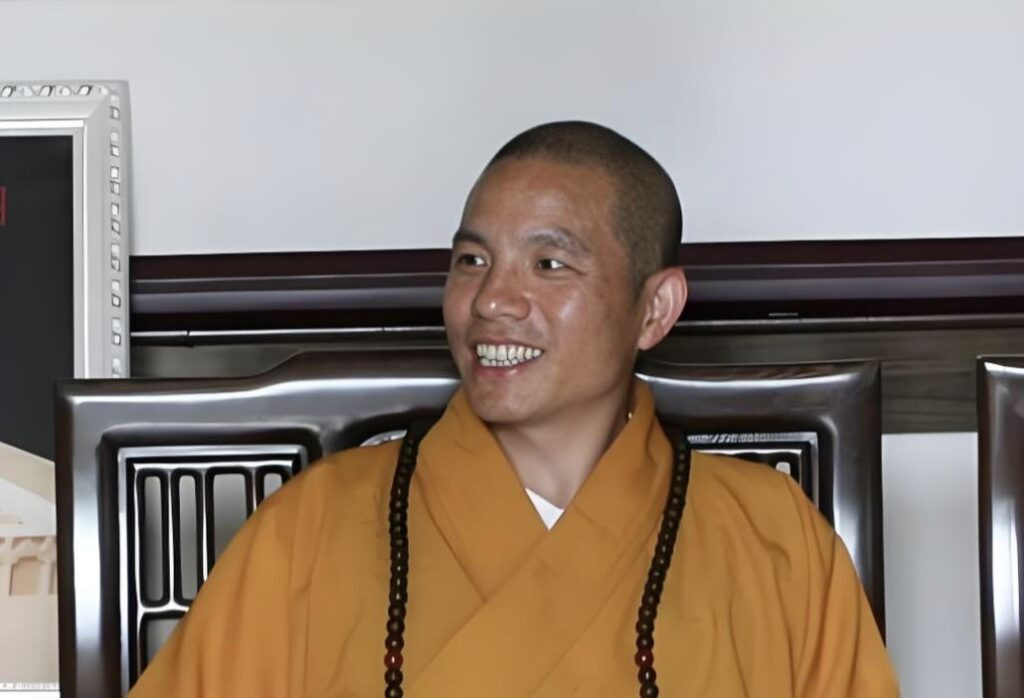
Shi Yinluo served 20 years as abbot of Baima Temple (白馬寺), China’s first Buddhist temple, gaining a reputation for austerity and strict tradition. Embracing the philosophy of “valuing farming and meditation equally (農禪並重),” he personally operated excavators and harvested wheat, cultivating an image of a humble leader.
The “Five New Regulations” — A Shock to the System
Immediately after his appointment, Shi Yinluo dismantled the commercial empire built by Shi Yongxin within days. His reform can be summarized as “de-commercialization.”
- Complete cessation of commercial activities: Worldwide kung fu tours and online shops were halted. Expensive incense disappeared, replaced by free incense, and donation QR codes vanished.
- Return to strict monastic life: All monks must rise at 4:30 AM, attend ceremonies, and engage in morning farming. Phones were confiscated, and all entertainment banned.
This reform declared a complete break from the past, sending a strong message to redefine 21st-century Shaolin monks from ‘professionals’ back to ‘callings.’
Monk Exodus: Is Shaolin a Job or a Calling?
Following Shi Yinluo’s iron-fisted reforms, over 30 monks and staff left the temple. While superficially a crisis of faith, this exodus also reflects a rational response to drastic changes in working conditions.
Who Left and Why?
Those who left were mainly ‘staff’ involved in commercial activities, ‘internet celebrity’ monks active on social media, and young monks accustomed to the freer atmosphere under Shi Yongxin. Confiscation of phones and forced labor were unbearable changes. One young monk lamented, “I used to look up scriptures on my phone; losing it felt like losing an arm.”
The Stigma of ‘Fake Monks’ and the Reality
Chinese social media condemned the departures as a purification removing “fake monks who chanted gold (money) instead of scriptures.” However, for many, Shaolin was less a spiritual sanctuary and more a relatively free workplace with decent income. This exodus can be seen as a predictable workforce turnover caused by a 180-degree shift in the temple’s business model — a practical choice driven by livelihood and lifestyle changes rather than spiritual depth.
Global Perspectives: Two Frames on the Shaolin Crisis
The Shaolin drama attracted worldwide media attention, but coverage varied significantly.
- Chinese and Greater China media: Focused on the state-led “purification” narrative. Portrayed the removal of a corrupt abbot and the temple’s regained purity as a positive change, elevating it as a model for nationwide temple reforms.
- Western media: Highlighted the dramatic “fall” of the ‘CEO Abbot,’ using sensational terms like “sex scandal” and “fall from grace,” reflecting critical views on modern China’s contradictions and authoritarian control.
This stark contrast in narratives reveals how the same event is framed differently according to political and cultural contexts.
Advertisement
The Invisible Hand: ‘Sinicization of Religion’ and Shaolin’s Future
The overarching force behind the Shaolin crisis is the Chinese Communist Party’s core religious policy under Xi Jinping: “Sinicization of Religion (宗教中國化).”
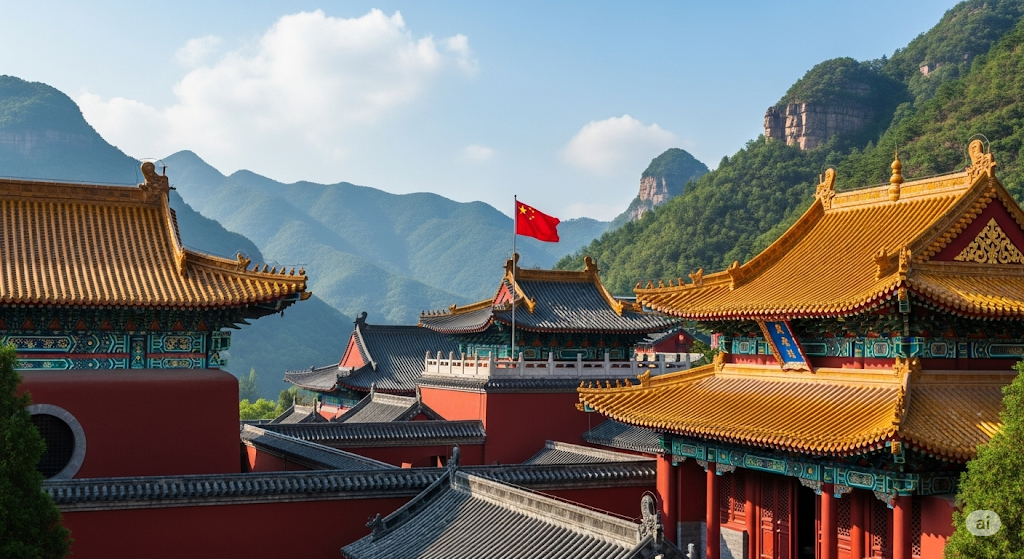
Sinicization requires all religions to conform to Chinese culture, socialist core values, and above all, the leadership of the Chinese Communist Party. Shi Yongxin’s success created an independent power base outside state control, directly opposing the party’s total dominance. As a symbol of “excessive commercialization,” he became a political liability to be removed. The corruption charges that were overlooked in 2015 became the perfect justification for his removal in 2025.
Comparison / Alternatives
| Aspect | Shi Yongxin Era (“CEO Abbot”) | Shi Yinluo Era (“Reformer Abbot”) |
|---|---|---|
| Core Philosophy | Spreading Shaolin culture through modern means | Returning to the essence of Zen and farming |
| Daily Life | Flexible life integrated with commercial activities | Mandatory early rising, ceremonies, farming, meditation |
| Discipline | Relatively loose, personal freedom guaranteed | Very strict, phones confiscated, entertainment banned |
| Main Income Sources | Kung fu shows, entrance fees, merchandise, licensing | Government support and basic donations |
Conclusion
What does the Shaolin crisis tell us?
- First, the change symbolizes a massive clash between commercialization and tradition. A temple once racing toward secular wealth now maintains quiet under state power.
- Second, the monk exodus reveals realistic conflicts arising when monastic life is forcibly transformed from a ‘job’ into a ‘calling.’
- Third, behind all events lies the state policy of ‘Sinicization of Religion,’ sending a strong message that no religious or cultural institution can escape absolute CCP control.
The now-quiet Shaolin is likely to become fully dependent on government funding, further tightening state control. Is this change a pure return to spiritual essence, or another state-orchestrated ‘performance’? What are your thoughts?
References
- Newsis Shaolin monks ’exodus’… Over 30 leave after abbot replacement and stricter discipline
- Yahoo News Taiwan Shaolin Temple’s new abbot Shi Yinluo’s iron fist “cutting financial sources, promoting hard cultivation” leads to over 30 monks leaving in 7 days
- Economic Daily News Shaolin Temple abbot replacement sparks monk resignation wave | Mainland politics and economy | Cross-strait
- JoongAng Ilbo “Had children with multiple women”… Shaolin Temple abbot’s “ugly double face”
- CTV News Shaolin Temple leader under investigation on suspicion of embezzling funds
- CNA Head of China’s world-famous Buddhist sanctuary Shaolin Temple under criminal investigation
- The Times of India Shaolin Temple head faces probe for ’embezzling funds’
- Sky News China’s Shaolin Temple’s ‘CEO monk’ under criminal investigation
- KDI Korea Development Institute Economic and social achievements after China’s reform and opening
- Hankyoreh The ‘Zen Buddhism’s birthplace’ Shaolin Temple lost its way in commercialization
- BBC News (YouTube) China investigates head monk of Shaolin ‘Kung Fu’ temple
- The Guardian Shaolin Kung fu temple chief under investigation over sex and fraud claims
- KBS (YouTube) [Issue] ‘MBA-trained abbot who led Shaolin revival…’
- KBS News “Embezzlement and sexual misconduct allegations” - Shaolin Temple abbot stripped of monk status
- SCMP New head of scandal-hit Shaolin Temple avoids commercial activities…
- Global Times Commercial offerings disappear after new abbot takes office at Shaolin Temple: media
- U.S. Department of State 2023 Report on International Religious Freedom: China
- Asia Review Understanding the religious landscape under Xi Jinping from the bottom up: Religion …
- Bitter Winter The Arrest of Shaolin’s Abbot Shakes Up Government-Controlled Chinese Buddhism
- JoongAng Ilbo Xi Jinping: “Religion must be Sinicized, religious people must promote patriotism”