
The Power of Focus That Never Comes in Peaceful Moments
Do you remember the moment when your most brilliant idea struck? It probably wasn’t while meditating peacefully in a garden. Rather, didn’t a clear insight come like a ray of light amid pressure close to pain? This article explores why clarity often arises not from calm but from chaos, and how to harness that power productively.
- The scientific principle of how discomfort sharpens our mind
- How to distinguish and utilize “good stress” and “bad stress”
- Real cases and strategies of people who turned adversity into great achievements
Why Does Clarity Arise Not from Calm but from Pain?
Do you recall the moment your brightest idea came to you? It probably wasn’t while meditating peacefully in a garden. Instead, wasn’t it when you were rushing to meet a deadline on a noisy subway, wrestling with an unsolvable problem through the night, or suddenly struck by a clear insight amid overwhelming emotional turmoil? Here lies the paradox we explore: Why does clarity often emerge from chaos rather than tranquility?
“Pain, unlike peace, triggers focus.” This provocative statement penetrates the essence of the discomfort we commonly feel. Here, ‘pain’ does not only mean physical suffering. It encompasses all forms of discomfort—pressure, adversity, anxiety, deprivation—that push us out of comfort. This article investigates how ‘magic’—innovative breakthroughs, bursts of creativity, peak performance—is forged in this crucible of discomfort. Yet it also carries a warning: this fire is powerful but dangerous. Mishandled, it can become a destructive blaze that consumes everything.
When the Brain Detects Threat: How Pain Creates Focus
The Primitive Switch: Fight-or-Flight and Focus
When our brain senses a threat, it activates a primal survival switch. The amygdala recognizes danger, triggering the sympathetic nervous system to release hormones like adrenaline and cortisol. This phenomenon, called the ‘Fight-or-Flight Response,’ channels our cognitive resources toward a single survival goal: ’eliminate the threat.’ Discomfort or threat forcibly hijacks our attention, compelling us to focus solely on the essence—a powerful survival command beyond our will.
From Humiliation to Legend: The Michael Jordan Story

A dramatic example of how this primal response leads to peak performance is the story of Michael Jordan. He faced the humiliation of being cut from his high school basketball team. This public failure—the ‘pain’—became a powerful motivator. His threat was not a beast but the psychological pain of social failure and incompetence, and his ‘fight’ manifested as relentless dedication to training.
The Two Faces of Stress: Eustress and Distress
However, not all pain creates magic. Endocrinologist Hans Selye distinguished between eustress (“good stress”) and distress (“bad stress”).
- Eustress: Arises from challenging but achievable tasks, fueling growth and optimal performance.
- Distress: Comes from overwhelming pressure, amplifying anxiety and reducing performance.
The Tragedy of the “Fast-Fast” Culture: When Pain Becomes Poison
The National Disease: “Fast-Fast” and Hurry Sickness
Korea’s “fast-fast” culture was a driving force behind rapid growth but cast a shadow called “hurry sickness.” This chronic urgency and impatience cause cognitive overload, leading to poor decisions and burnout. It’s not productive busyness but busyness as an end itself—a cultural manifestation of distress.
The Tragedy of Concrete: Sampoong Department Store and Seongsu Bridge
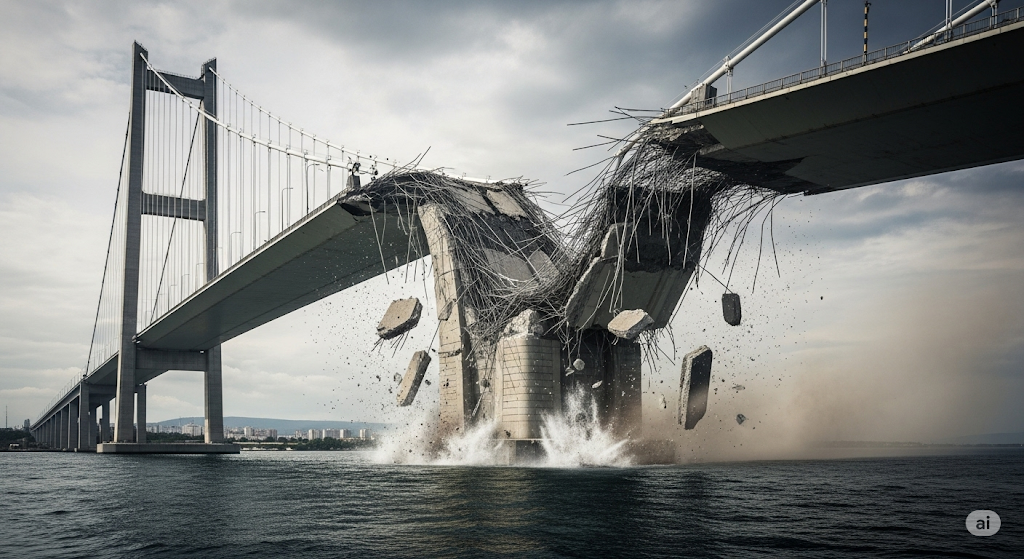
The most horrific outcomes of this hurry sickness culture were the major collapses in the 1990s. The 1995 Sampoong Department Store collapse and the 1994 Seongsu Bridge collapse both resulted from ignoring safety to shorten construction time and cut costs. This is a tragic proof of Goodhart’s Law: “When a measure becomes a target, it ceases to be a good measure.”
Advertisement
Modern Echoes: Exploding Smartphones and Failed Games
These failure patterns are not just history. The Samsung Galaxy Note7 crisis stemmed from rushing to beat competitors to market, and the failure of “Cyberpunk 2077” came from succumbing to investor and fan pressure to release an unfinished game. These cases show how the “fast-fast” culture manifests as destructive distress in the digital age.
The Alchemy of Adversity: Stories of Turning Pain into Genius
Humans understand themselves and the world through stories. Great pain shatters a person’s life narrative, but acts of creation—art, theory, business—are desperate survival instincts to rebuild that narrative. The extreme focus required for creation imposes new order on chaos and crafts the next story of life.

- Frida Kahlo: After a terrible accident, painting herself from bed became a catalyst to transform pain into art.
- Viktor Frankl: In the hell of Auschwitz, he focused on the “will to find meaning,” proving logotherapy.
- J.K. Rowling: During severe depression, writing was both an escape from emotional chaos and a way to impose order.
- Vincent van Gogh: Isolation in a mental hospital led to intense focus on his inner world and landscapes.
- Steve Jobs: The pain of being fired from Apple gave him the liberating feeling of “replacing the burden of success with the lightness of a beginner.”
This is not limited to artists. The physical pain of athletes pushing limits or the mental pain of developers debugging overnight are similar. When goals are clear, discomfort becomes a powerful lens focusing us on the most essential problems.
Intentional Discomfort: How to Create Your Own “Magic Moments”
Beyond merely reacting to unavoidable pain, we can intentionally create productive discomfort to bring magic into our lives.
The Art of Deep Work: Sharpening Focus in a Distracted World
Cal Newport’s “Deep Work” means “professional activities performed in a state of distraction-free concentration that push cognitive capabilities to their limit.” It rejects the ‘peace’ of easy distractions and deliberately chooses the ‘pain’ of difficult focus to create high value.
Discovering Flow: Tightrope Walking Between Anxiety and Boredom
Mihaly Csikszentmihalyi’s “Flow” theory occurs when the challenge level of a task and an individual’s skill level are perfectly balanced. Flow is inherently uncomfortable because it requires leaving the comfort zone, but it also delivers deep satisfaction—a form of good pain, the core of eustress.
Conclusion
Pain and pressure are double-edged swords. Uncontrolled, aimless pressure destroys us, but clear, meaningful pressure can be the refining fire that forges innovation.
- Key Point 1: Pain is a switch for focus. Our brain is designed to block unnecessary information and focus on what matters most when sensing threat.
- Key Point 2: Stress can be medicine, not poison. Manageable ‘good stress’ (eustress) optimizes performance and drives growth.
- Key Point 3: Discomfort can be chosen intentionally. By creating intentionally uncomfortable environments like deep work or flow, we can achieve peak performance.
Instead of endlessly seeking peace and comfort, we need the wisdom to embrace moments of productive discomfort. How about setting a 25-minute timer right now, turning off all notifications, and focusing on your most important task? That brief painful moment might magically transform your productivity.
References
- WebMD Fight, Flight, Freeze, and Fawn - Acute Stress Response
- MD Anderson Cancer Center 4 things to know about cortisol and stress
- Verywell Mind What Is the Fight-or-Flight Response?
- Simply Psychology Fight, Flight, Freeze, or Fawn: How We Respond to Threats
- Reddit MJ discusses being cut from HS varsity
- YouTube Michael Jordan STORY! ✂️✂️ #shorts
- YouTube Michael Jordan’s Story - Cut from Varsity to NBA Champion
- American Psychological Association Distress vs Eustress
- Psychology Tools Performance and the Yerkes-Dodson Law
- Ulsan Daily [Autonomy Era] Korea’s ‘Fast-Fast’ Culture and COVID-19
- Gyeongsang Ilbo [Gyeongsang Opinion] Korean ‘Fast-Fast’ Culture
- Le Monde Diplomatique When Corruption Built Department Stores and Bridges Collapsed with People Inside
- Daum [Feature] 25 Years After Collapse Nightmares… The Second Sampoong Department Store Still Exists
- YouTube Absurd Cause of Seongsu Bridge Collapse ‘Poor Welding’ #Kkokkomu
- KBS News Six Arrest Warrants for Seongsu Bridge Poor Construction
- Namu Wiki Seongsu Bridge Collapse Accident
- ModelThinkers Goodhart’s Law
- Chosun Biz Hurry Sickness That Exploded Galaxy Note7
- CBS News Samsung says Note 7 battery design, manufacturing caused fires
- Korea Times “Galaxy Note7 Fire Cause is Battery”
- YouTube Galaxy Note7, “Battery Cell Defect”… Why Did It Explode? / YTN
- dev.to How Developers can learn from the mistakes of Cyberpunk 2077
- indie games devel Cyberpunk 2077 analysis of a Failure
- IT Chosun Cyberpunk 2077 91 Score Amid Criticism “Bugs & Optimization Need Improvement”
- YouTube Witcher-level Story, But Should Have Delayed Release More - Cyberpunk 2077 Review
- STOVE CDPR, Cyberpunk 2077 Crunch Mode Controversy
- Namu Wiki Crunch
- Book Journalism Move Fast and Break Things
- LeadDev Why you shouldn’t move fast and break things
- CNET Zuckerberg: ‘Move fast and break things’ isn’t how Facebook …
- S-Space What is Narrative?
- Tistory [Research] What is Narrative? : Lecture Summary on Book Narratology
- History.com How a Devastating Accident Changed Frida Kahlo’s Life and Inspired Her Art
- Mezrano Alabama Injury Lawyers Unveiling the Impact of the Frida Kahlo Bus Accident!
- AMA Journal of Ethics Pain and the Paintbrush: The Life and Art of Frida Kahlo
- PubMed Central Searching for Meaning in Chaos: Viktor Frankl’s Story
- The Viktor E. Frankl Institute of America What is Logotherapy?
- Counseling Today Archive Celebrating Man’s Search for Meaning
- Quartz How JK Rowling overcame depression and rejection to sell over 400 million books
- Reddit Monday Motivation: J. K. Rowling’s Story (Long)
- JK Rowling Stories My Story - JKR
- Alpilles en Provence Vincent van Gogh in Saint-Rémy-de-Provence
- Van Gogh Museum Hospitalization
- Wikipedia Saint-Paul Asylum, Saint-Rémy (Van Gogh series)
- D23 Steve Jobs
- TechRadar 40 years ago, Steve Jobs was fired from Apple – but it made Macs better than ever
- Positive Psychology Deep Work: The Book, the Meaning & the Author
- Tistory Deep Work, Cal Newport - Weekly Lee Seonghun
- The Blog of Graham Mann Deep Work by Cal Newport - Summary & Notes
- Sam Thomas Davies Book Summary: Deep Work by Cal Newport
- Autonomous The 4 Rules of Deep Work: Strategies to Master Your Focus
- Brunch Deep Work: 5 Stages of Flow
- Maverick Learning Flow Theory
- Ground+Air The Golden Rule for Accessing Flow – Tuning the Challenge/Skills Balance
- Pacific Executive Search Understanding the Four Quadrants of Flow Mental States
- Slow Food Korea Association Definition of Slow Food
- Wikipedia Slow Food
- Geumseong Publishing Teaching Encyclopedia Slow Food
- Wikipedia Slow Food