
The Soul Forged by an Island: The True Story of the Jindo Dog Rewritten by Science.
- The incredible abilities of the Jindo dog shown through the true story of ‘The Returned White Dog’
- Three major hypotheses on the origin of the Jindo dog and scientific verification results
- The history of becoming a natural monument and a world-renowned breed
The Story of ‘The Returned White Dog’ Who Ran 300km
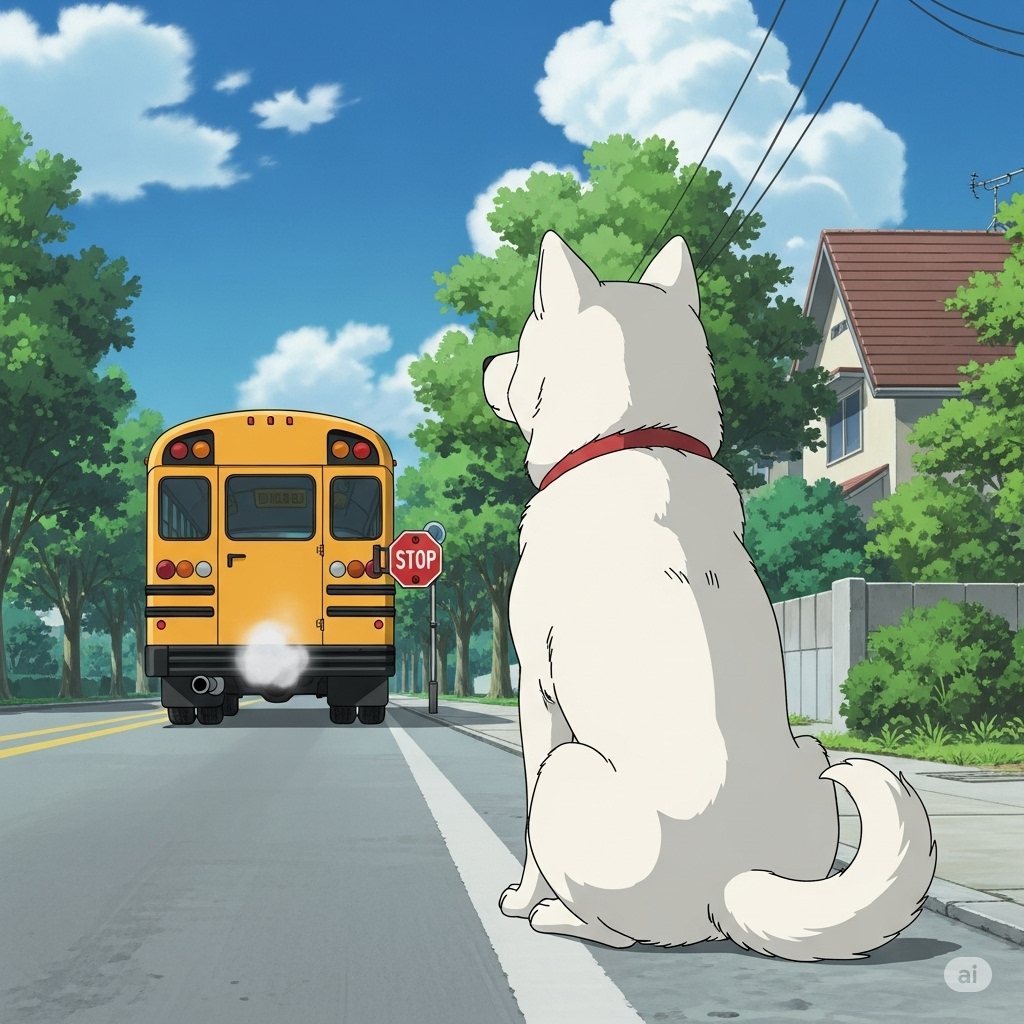
In 1993, there was a Jindo dog that moved all of South Korea. This is the story of ‘The Returned White Dog.’ A white dog owned by Grandma Park Bok-dan in Jindo, Jeollanam-do, was sold to Daejeon, 300km away, but returned to her arms after 7 months, starving and exhausted.
This incident went beyond a simple animal anecdote, deeply engraving the Jindo dog’s astonishing homing instinct and absolute loyalty to its owner in the hearts of the nation. It was even included in textbooks and commemorated with a statue. Where did such an extraordinary spirit come from? Following the footsteps of ‘The Returned White Dog,’ we begin a grand journey toward the origin of the Jindo dog.
The Island Fortress: The Natural Environment That Preserved the Jindo Dog’s Lineage
To understand the Jindo dog, we must first know its homeland, Jindo. The island’s isolated geography was the decisive factor that preserved its pure bloodline for centuries without the influx of outside breeds. Especially, the strong currents of the Myeongnyang Strait and Uldolmok acted as natural barriers.
This closed environment became a vast ’natural laboratory’ preserving the Jindo dog’s unique genes. Here, the breed’s iconic traits were perfected over centuries.
Characteristics of the Jindo Dog: From Appearance to Temperament
The Jindo dog is like a completed masterpiece defined by distinct features.
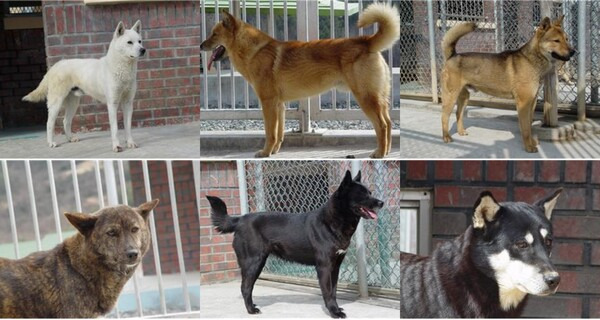
- Physical Standards: A medium-to-large dog with an inverted triangular head, erect ears, and a strongly curled tail. Overall, it boasts a sturdy and balanced physique.
- Varied Coat Colors: Besides the well-known yellow and white coats, it also comes in black, gray (jaegu), brindle (hogu), and black-tan (four-eyed), totaling six diverse coat colors.
- Innate Temperament:
- Fierce Loyalty: Devoted to its first owner for life and struggles to adapt if the owner changes.
- Bravery and Boldness: Strong instinct to protect its territory, not backing down even against wild boars or fierce predators.
- Natural Cleanliness: Only relieves itself away from its sleeping area and keeps itself clean by licking.
- Supernatural Homing Instinct: As proven by ‘The Returned White Dog,’ it can find its way home from hundreds of kilometers away.
- Exceptional Intelligence: Highly trainable but sometimes considered stubborn due to independent thinking.
Origins in the Fog: Where Did the Jindo Dog Come From?
Before science provided clear answers, the origin of the Jindo dog was surrounded by various legends. Which story do you find most plausible?
- First, the Mongol Invasion Theory: The most widely known hypothesis claims that Mongol troops invading Goryeo in the 13th century left military dogs behind, which became the ancestors. However, why dogs were left only on Jindo remains a mystery.
- Second, the Southern Song Introduction Theory: During the Goryeo period, a Chinese Southern Song trading ship wrecked near Jindo, and the dogs on board settled there. This theory is based on maritime trade but lacks concrete evidence.
- Third, the Indigenous Breed Theory: The claim that the Jindo dog is a direct descendant of ancient dogs that have lived on the Korean Peninsula for thousands of years. Dog bones found at Neolithic archaeological sites support this.
Dramatic narratives like ‘descendants of conquerors’ or ‘survivors of shipwrecks’ may sound more appealing, but the truth might have been closer to home all along.
Advertisement
The Oracle of DNA: What Science Revealed About the Jindo Dog’s Roots
In the 21st century, modern genetics put an end to centuries of speculation. In 2012, the Korean Research Institute of Bioscience and Biotechnology decoded the genome of a Jindo dog named ‘Geumgang,’ revealing shocking facts.
- Proof of a Pure, Distinct Bloodline: Compared to 79 dog breeds worldwide, the Jindo dog was confirmed to have a unique pure lineage with no mixing. It was especially distinct from the Japanese Akita.
- Unique Olfactory Gene Discovery: Significant differences in olfactory-related genes suggest that the Jindo’s exceptional abilities are genetically encoded.
Subsequent studies by the Rural Development Administration revealed deeper truths: Korean native dogs are much closer genetically to ancient Southeast Asian lineages rather than northern Mongolian types. This effectively refutes the long-held ‘Mongol military dog theory.’
Comparative Analysis of Origin Theories
| Theory | Claims and Evidence | Scientific Verification |
|---|---|---|
| Mongol Invasion Theory | Descendant of 13th-century Mongol military dogs; based on oral legends linked to the Sambyeolcho Rebellion. | Refuted. Genetically closer to ancient Southeast Asian lineages than northern breeds. |
| Southern Song Introduction Theory | Introduced by shipwrecked Southern Song trade ships during Goryeo. | Unlikely. Lacks evidence as sole origin; genetic analysis supports older indigenous lineage. |
| Indigenous Evolution Theory | Evolved independently from ancient Korean dogs found in Neolithic sites. | Most plausible. Confirmed pure lineage, ancient southern origin, and genetic links to ancient wolves. |
The Paradox of Preservation: The True Heritage We Must Protect
Past natural monument policies recognized only yellow and white coats as standards. However, genetic research revealed that other coat colors like ‘four-eyed’ are not signs of impurity but precious heritage carrying ancient wolf genes. This shows the ‘paradox of preservation’ where policies focusing solely on appearance nearly damaged the true genetic diversity of the Jindo dog. What we must protect is not a specific look but the rich genetic diversity shaped over thousands of years.
The Journey to National Treasure: The Jindo Dog Becomes a Global Icon
Ironically, the Jindo dog’s official recognition began during the Japanese colonial period in 1938 when it was designated as Natural Monument No. 53. This designation served as a shield protecting the breed from indiscriminate slaughter during wartime.
After liberation, in 1962, the Korean government re-designated the Jindo dog as Natural Monument No. 53 and enacted the rare single-breed protection law, the “Korean Jindo Dog Protection and Promotion Act,” in 1967. Only dogs passing strict inspections by the Jindo Dog Office in Jindo County are officially recognized as Jindo dogs, and registered dogs are prohibited from being taken off the island without permission. I myself was surprised by the strict controls when passing the checkpoint on the Jindo Bridge.
Thanks to these efforts, in 2005, the Jindo dog was officially registered with the Fédération Cynologique Internationale (FCI) and the UK Kennel Club, joining the ranks of world-renowned breeds. However, this fame has also brought new challenges such as excessive commercialization and pedigree disputes. The effort to preserve pure bloodlines sometimes clashes with human desires to create a ‘perfect appearance,’ posing a challenge we must resolve.
Conclusion
The journey to uncover the origin of the Jindo dog has been like an epic saga. The key points are summarized as follows:
- The Jindo dog is an indigenous breed: Although external origin theories (Mongol, Southern Song) were long favored, DNA analysis shows it is most likely a descendant of ancient dogs (southern lineage) that have lived on the Korean Peninsula for thousands of years.
- Jindo is a ’natural laboratory’: The island’s isolated environment prevented crossbreeding with outside breeds and honed unique traits like loyalty and homing instinct over centuries.
- Diversity is a precious heritage: Science has proven that coat colors beyond yellow and white are also part of the Jindo dog’s pure genetic heritage. Preserving genetic diversity is the true meaning of conservation, beyond mere physical standards.
The Jindo dog is more than just an animal; it is a living cultural heritage embodying Korea’s history and spirit. Next time you meet a Jindo dog, why not feel the thousands of years of time and the soul of the island reflected in its eyes?
References
- The Returned White Dog Namu Wiki
- Pride of the National Dog with Loyalty, Intelligence, and Bravery! Why the Jindo Dog is Special YouTube
- ‘The Jindo Dog White Dog Returned from Daejeon’ Afterwards Break News
- ‘The Touching Story of Grandma Park Bok-dan’s White Dog Who Ran 700 Ri Back from Daejeon…’ YouTube
- [Today’s Thorough Review] The Returned White Dog Financial Review
- The Returned White Dog Wikipedia
- “The Returned White Dog is also a Story of This Island” Korea’s Representative K Jindo Dog’s Loyalty and Intelligence! YouTube
- Jindo Dog Traditional Culture Portal
- Jindo Dog Namu Wiki
- Jindo Dog Wikipedia
- The Jindo Dog of Jindo (珍島의 珍島개) Encyclopedia of Korean Culture
- Dogs Were Domesticated on the Korean Peninsula 6,000 Years Ago Yonhap News
- Jindo Dog Genome Fully Analyzed… Proven Pure Indigenous Breed Chosun Biz
- The Root of Korean Native ‘Jindo Dog’ “The Answer is Out!” / YTN Science YouTube
- Secret of Jindo Dog Coat Color Genes Unveiled… Unique Mutation Found in ‘Four-eyed’ News TNT
- Factors Determining Jindo Dog Coat Color Revealed Through Genome Information Korea Policy Briefing
- [Full] The Truth of ‘The Returned White Dog’ _ MBC December 5, 2006 Broadcast YouTube