
Tracing the enduring desire for education and its shadows across eras, from the Gwageo exams to today’s fierce entrance exam competition.
- How the Joseon Dynasty’s Gwageo system became the prototype of modern private education
- Historical educational philosophies embedded in the stories of Han Seok-bong and Mencius’ mother
- Why modern entrance exam competition is a direct legacy of the Gwageo system
The Gwageo System: The Beginning of Modern Educational Zeal
Korea’s intense passion for education is not a sudden modern phenomenon. Its roots trace back to the Joseon era, when an individual’s fate and family honor were decided by a single exam. The Joseon Gwageo (科擧) system ostensibly offered a meritocratic and fair path, but paradoxically laid the foundation for the fiercely competitive private education market that persists today.
The Only Path to Power: Gwageo
In Joseon society, the Gwageo system was more than just an exam. It was virtually the sole channel for social mobility and the most important mechanism to acquire power and prestige.
The Gwageo was divided into the civil service exam (Mungwa, 文科), the military exam (Mugwa, 武科), and the technical exam (Japgwa, 雜科). Among these, the civil exam held the highest prestige and was mainly taken by the yangban aristocracy. Passing the civil exam involved a long and arduous process through preliminary (Sogwa, 小科) and final stages (Daegwa, 大科).
This multi-stage exam system demanded prolonged, dedicated preparation from candidates, naturally causing an explosion in demand for specialized education. Although theoretically open to any yangin (commoners of good standing) or higher, the deep understanding required of Confucian classics (Four Books and Five Classics) was nearly impossible for commoners engaged in daily labor. Ultimately, the Gwageo system, under the guise of meritocracy, served to reproduce and reinforce existing social hierarchies.
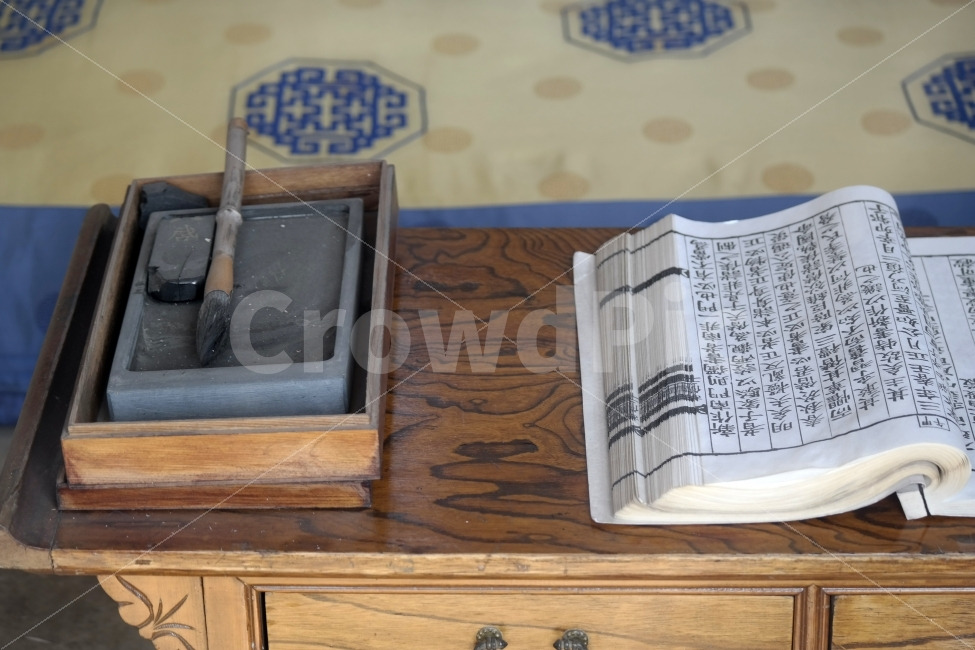
Table 1: The Ladder of Social Advancement in Joseon – The Gwageo System
| Exam Type | Main Objective and Stages | Main Subjects and Candidates |
|---|---|---|
| Civil Exam (Mungwa, 文科) | Civil official selection (Sogwa, Daegwa) | Confucian classics, policy essays (mainly yangban) |
| Military Exam (Mugwa, 武科) | Military officer selection (Chosi, Boksi, Jeonsi) | Martial arts, military texts (yangban, commoners) |
| Technical Exam (Japgwa, 雜科) | Technical official selection (Chosi, Boksi) | Medicine, law, specialized texts (mainly jungin middle class) |
Collapse of Public Education and Rise of Private Education
While enthusiasm for Gwageo preparation soared, ironically, state-established public education institutions like Sungkyunkwan and Hyanggyo were neglected. According to the Annals of the Joseon Dynasty, Sungkyunkwan often had only 10–20% of its enrollment filled.
This was because the broad liberal education offered by public schools no longer met the needs of exam candidates. As the Gwageo exam increasingly emphasized ‘ornate rhetoric and rote memorization’ over ethical understanding, students turned to private education that taught the necessary exam techniques.
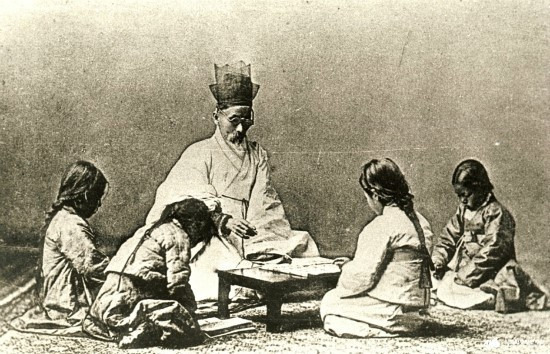
In this vacuum, various private education institutions flourished. From village seodang (private schools) to prestigious private tutors, the most influential were the seowon (private academies). Originally founded for scholarly research, seowon effectively became elite entrance exam institutions. Like today’s prestigious cram schools, seowon focused on teaching specific interpretations tied to political factions, which contributed to social decay in late Joseon.
Advertisement
The Betrayal of Meritocracy: Exams as Tools of Heredity
The private education boom centered on the Gwageo system overturned the original meritocratic intent. Passing through the costly filter of private education, the Gwageo system became an effective tool for the ruling class to inherit power.
According to Professor James Palais, among 14,600 civil exam passers in the Joseon dynasty, 53% came from only 36 prestigious families. Success was essentially inherited through the economic power to purchase superior preparatory education. Ultimately, the Gwageo system, which proclaimed meritocracy, paradoxically created the most entrenched hereditary system when combined with private education.
The Philosophy of Devotion: Parents Who Created Educational Zeal
The educational zeal of the Joseon era was driven not only by the system but also by a strong cultural foundation that regarded educating children as a moral duty and highest value for parents.
Success and Honor: Education as Filial Piety
In traditional society, the ultimate goal of education was Ipshin Yangmyeong (立身揚名) — to establish oneself and bring honor to one’s parents and ancestors. This was considered the highest practice of Confucian virtue, filial piety (孝).
From this perspective, education was not a choice for success but a moral obligation every person must fulfill. Failure in exams was seen not only as personal defeat but as a moral and ethical failure, justifying parents’ total devotion to their children’s education.
Han Seok-bong’s Mother: Discipline Toward Perfection
The iconic figure of Korean educational zeal, Han Seok-bong’s mother, exemplifies the essence of education as inner mastery and self-discipline, beyond mere sacrifice.
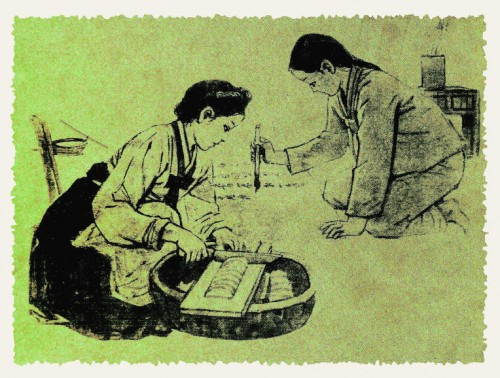
When her son returned before finishing his studies, she challenged him to a calligraphy contest in the dark while slicing rice cakes. Her rice cakes were consistently even and beautiful, but his calligraphy was a mess. This story, without words, demonstrated an undeniable standard of excellence, guiding her son to higher achievement. It presents a cultural script where parents are the ultimate ‘quality controllers’ of their children’s character and skills.
Mencius’ Mother: The Strategist of Environment
Mencius’ mother focused on controlling the external environment to elicit her son’s dedication. The story of ‘Mengmu Moves Three Times’ (孟母三遷之敎), where she moved three times to find the ideal educational environment, established the importance of surroundings.
Also, the tale of ‘Cutting the Loom’ (斷杼敎子), where she cut the weaving loom after her son stopped studying, taught a harsh lesson that wasted effort cannot be recovered. These stories are historical prototypes of modern education strategies involving relocating to prestigious school districts and tightly managing children’s schedules.
Advertisement
Table 2: Traditional Parental Education Models Compared
| Parental Archetype | Core Principles and Methods | Modern Equivalent |
|---|---|---|
| Han Seok-bong’s Mother | Inner mastery and discipline (practical proof, demand for perfection) | ‘Tiger mom’ emphasizing character building and skill mastery through hardship |
| Mencius’ Mother | Environmental control and dedication (moving for optimal place, shock therapy) | Moving to elite school districts, strict schedule management, removing distractions |
| Shin Saimdang | Inspiration through example (parents’ own scholarly pursuit, ‘reading mother’) | Lifelong learning at home, emphasizing creativity and intellectual curiosity |
Echoes Today: How the Past Continues
Today’s intense educational competition in Korea is a direct legacy of the past’s structures and philosophies, adapted to modern times.
The New Gwageo: University Entrance Exams
The social function of the Joseon Gwageo system lives on in the College Scholastic Ability Test (CSAT, 수능). Like the Gwageo, a single day’s exam profoundly impacts one’s entire life. The fierce competition to pass through a narrow gate to elite status remains unchanged. Academic achievement is still considered the most important factor directly linked to socioeconomic status.
Modern Seowon: The Cram School Industry
The role of seowon in Joseon is remarkably mirrored today by Korea’s cram school industry. As of 2023, the average monthly private education expense per high school student is 491,000 KRW, primarily focused on supplementing school lessons and preparing for exams.
When I was a student, cram schools were optional; now they are essential. Many newlyweds hesitate to have children because they cannot afford the astronomical private education costs for even one child. This issue extends beyond education, directly affecting the nation’s future.
Ultimately, the historical system relying on private education to secure elite status has evolved into a modern system that perpetuates inequality and exacerbates South Korea’s record-low birthrate problem.

Table 3: Private Education in Korea – Past and Present
| Aspect | Joseon Era (15th–19th Century) | Modern Era (21st Century) and Continuity |
|---|---|---|
| Main Institutions | Seodang (private schools), private tutors, seowon (academies) | Cram schools, private tutoring, online lectures. Central role of private education remains |
| Main Goal | Passing the Gwageo exam | Passing the CSAT and university entrance exams. Single national exam success remains the goal |
| Socioeconomic Impact | Strengthening hereditary power of elite yangban families, increased factionalism | Deepening social inequality, contributing to low birthrate. Private education acts as a key mechanism reinforcing class |
Conclusion: The Unbroken Thread of Educational Zeal
Modern Korea’s passion for education is a complex product of structural and philosophical legacies from the past.
Advertisement
Key Summary
- Structural Roots: Modern entrance exam competition inherits the Joseon Gwageo system’s structure, where rewards concentrate on a few winners.
- Cultural Drive: Confucian values that saw children’s success as family honor and filial piety still strongly motivate parental devotion today.
- Modern Outcome: The old system has intensified social inequality and triggered a national crisis of low birthrates.
How should we view this unbroken chain of educational zeal? And what alternative paths can we offer future generations? I hope this article provides deep insight into Korea’s educational past and present.
References
- Uri History Net Education and the Gwageo System
- Encyclopedia of Korean Culture Gwageo (科擧)
- YouTube Joseon’s Version of the CSAT, the Gwageo System: A Country Obsessed with Education, Joseon
- Korea Education Newspaper Private Education and Fake Residency in Joseon Gwageo Exams
- Hankook Ilbo [Science Essay] Private Education that Destroyed Joseon
- National Archives Meeting Korea through Records > Education > Seodang
- Encyclopedia of Korean Culture Seodang (書堂)
- Policy Briefing The Pillar of the Joseon Dynasty: Gwageo Exams
- Children’s Dong-A [Exciting NIE/This News That Talk] Even in Joseon, There Were ‘Forbidden Foods’ Before Gwageo!
- KOCW Confucian Thought and Education
- 100 National Cultural Symbols Han Seok-bong and His Mother
- Uri Culture Newspaper Child Education and the Rod Culture (敎子之禮)
- Reading Newspaper [History, Revisited] Asking Joseon’s ‘Senior Mom’ About Child Education 500 Years Ago
- Monthly Chosun [History and Today] Viewing the Cho Hyun-ah Incident through Joseon Crown Prince Education
- ScienceOn [Paper] Comparative Study of Public and Private Education: Directions for Public Education
- National Assembly Future Institute Private Education Overheating and Future Talent Development: Correlation Analysis and Policy Suggestions
- Nara Economy World’s Highest Private Education Dependence, The Reality of Korean Education