
How to Beat Yourself
Introduction: The Mystery of Unworn Shoes and Unused Gym Memberships
Let’s be honest. Deep in your closet, there’s a pair of shoes you bought because of a 70% discount but only wore once. Next to them lies a yoga mat bought in a New Year’s resolution, still unopened in its plastic. Why do smart and capable people like us consistently make decisions that our future selves will regret? Why do our actions often contradict our best intentions?

To answer this, we must meet two types of humans. One is the perfectly logical robot imagined by traditional economics, ‘Homo Economicus.’ The other is the complex, emotional, and sometimes messy real ‘human’ we face in the mirror every morning.
This article is not just a list of human mistakes. It’s about predictable and systematic patterns of irrationality. Behavioral economics is the science that decodes these patterns—a ‘user manual for the human brain.’ Let’s journey together into the intellectual world of Nobel laureates, the catastrophic failures of billion-dollar companies, and finally, the practical toolbox to become the ‘CEO of your own brain.’
Part 1: The Perfect Logical Robot That Doesn’t Exist (Sorry, Economists!)
The Ideal Human
The world in economics textbooks is built on the ideal human called ‘Homo Economicus.’ This economic human is like a supercomputer: possessing perfect information, unwavering willpower, and driven solely by one goal—to maximize personal benefit (utility). This model is elegant and mathematically beautiful, simplifying a complex world, which is why economists have long loved it.
Early Cracks
But even Adam Smith, the father of economics, knew humans weren’t that simple. In both “The Wealth of Nations” and “The Theory of Moral Sentiments,” he described humans as complex beings who empathize with others and make moral judgments. In the early 20th century, institutional economists argued that human decisions are influenced more by social ‘habits’ or ‘customs’ than rational calculations.
The Decisive Crack: Herbert Simon
The true challenger to perfect rationality was the versatile genius Herbert Simon. His argument was clear: humans do not optimize but ‘satisfice.’
Imagine choosing a restaurant. The optimizing ‘Homo Economicus’ would research every restaurant in the city, analyze reviews, menus, and prices perfectly, and pick the single best one. We, satisficers, walk down the street, see a decent place with empty seats, and go in. We don’t seek the ‘best’ but ‘good enough.’
Simon won the Nobel Prize in Economics for the concept of ‘Bounded Rationality,’ but mainstream economists dismissed his idea as insightful but mathematically imprecise. To break through the strong mathematical fortress of mainstream economics, philosophical insight wasn’t enough. Someone had to prove mathematically and experimentally that human irrationality is not mere error but a predictable pattern. This is where psychologists entered the stage.
Advertisement
Part 2: Brain Hackers: Psychologists Who Won the Nobel Prize in Economics
A Legendary Partnership
The seeds planted by Herbert Simon sprouted with Daniel Kahneman and Amos Tversky, two Israeli psychologists. Their legendary intellectual partnership rigorously demonstrated that human judgment ‘errors’ are not random mistakes but systematic and predictable ‘biases’ arising from how our brains work.
The Bridge to the Mainstream
While Kahneman and Tversky explored the secrets of the human mind in the lab, young economist Richard Thaler collected strange real-world phenomena that traditional theory couldn’t explain. Wondering why even smart professors repeatedly made irrational economic choices, he found answers in Kahneman and Tversky’s research. Thaler’s role was to build a crucial ‘bridge’ between psychological discoveries and economic theory, translating psychological insights into economic language and applying them to real phenomena like the ‘endowment effect’ and ‘mental accounting.’
From Outcasts to Mainstream
Their journey was like a drama. Simon’s philosophical challenge, Kahneman and Tversky’s psychological proof, and Thaler’s economic integration formed three essential steps for behavioral economics to take root successfully. Since their seminal papers in the late 1970s, research exploded, and what was once considered heresy became a mainstream academic discipline taught at top universities worldwide, profoundly influencing government policy and corporate management. The three Nobel Prizes in Economics awarded to Simon (1978), Kahneman (2002), and Thaler (2017) mark historic milestones officially recognizing behavioral economics’ rise from the margins to the core of economics.

Part 3: The Secret Rules of Your Mind: A User Guide
Prospect Theory: The Pain of Losing Is Greater Than the Joy of Gaining
The core theory of behavioral economics, Prospect Theory, explains how we actually make decisions under uncertainty. It is a powerful alternative to traditional expected utility theory.
- Reference Points: We don’t feel happiness based on the absolute amount of money we have (e.g., a bank balance of 50 million won) but react to ‘changes’ from a certain reference point. Consider someone whose salary dropped from 40 million won to 38 million won versus someone whose salary rose from 28 million won to 30 million won. Although the first has a higher absolute amount, the latter feels happier. This is because the previous salary serves as a ‘reference point,’ causing one to experience a ‘loss’ and the other a ‘gain.’
- Loss Aversion: This is the heart of prospect theory. The psychological pain of losing 100,000 won is much greater than the joy of gaining the same amount. Studies show this pain is about 2 to 2.5 times stronger than pleasure. This powerful psychological mechanism explains why we find it so hard to give up what we currently have (endowment effect) and why we dislike change (status quo bias).
A vivid example of these psychological principles is Kahneman and Tversky’s famous ‘Asian Disease Problem’ experiment.
Story: The Asian Disease Problem
Imagine you are a public health official. A rare Asian disease threatens to kill 600 people. You have two options.
Frame 1 (Gain):
- Option A: Save 200 people for sure.
- Option B: 1/3 chance to save all 600 people, 2/3 chance to save none.
Frame 2 (Loss):
- Option C: 400 people will definitely die.
- Option D: 1/3 chance that no one dies, 2/3 chance that all 600 die.
Mathematically, options A and C are equivalent (200 saved, 400 dead), and options B and D are equivalent. But the results were shocking. In the ‘gain’ frame, 72% chose the sure gain (A). In the ’loss’ frame, only 22% chose the sure loss (C), and 78% chose the risky gamble (D).
Advertisement
This matches prospect theory’s prediction exactly. We avoid risk when protecting gains (choose A) but take bigger risks to avoid losses (choose D). Our choices depend not on objective facts but on how those facts are framed.
Heuristics and Biases: The Brain’s Lazy but Risky Shortcuts
To navigate a complex world, our brain uses mental shortcuts called heuristics instead of analyzing all information perfectly. But these shortcuts sometimes lead to systematic errors, or biases.
- Anchoring: The first piece of information acts as an anchor influencing subsequent judgments. For example, the initial price offered in a negotiation heavily affects the final price, or stores show a high ‘regular price’ alongside a ‘discounted price’ to make the discount look bigger.
- Availability: We judge the frequency of events based on how easily examples come to mind. Media coverage of plane crashes makes us overestimate their risk compared to statistically more dangerous car accidents.
- Framing: As seen in the Asian Disease Problem, the way information is presented changes decisions. A yogurt labeled ‘5% fat’ feels less healthy than one labeled ‘95% fat-free’ due to framing.
Inner Tug-of-War: Planner vs. Doer
Inside us coexist the rational ‘planner’ who sets long-term goals and the impulsive ‘doer’ who seeks immediate gratification. This conflict causes ‘present bias,’ where we prefer current pleasure over larger future rewards. This explains why diets, quitting smoking, and saving money often fail.
Adding to this is the strange habit of ‘mental accounting.’ Economically, money is fungible, but we mentally label it. We save hard-earned ‘salary’ carefully but spend ‘found money’ easily. This leads to irrational spending and investment decisions.
Loss aversion, status quo bias, and the power of default options are closely linked. For example, why do we resist changing default settings? It’s not just laziness. Changing the current state is seen as both gaining potential benefits and losing the familiar. Due to loss aversion, we feel the pain of loss more strongly, resisting change and sticking to the status quo. Behavioral economics theories interlock to explain the complexity of human decision-making.
Part 4: The Great Failures: What Happens When Human Psychology Is Ignored
Theory gains power only when proven in reality. Dramatic failure cases of companies and governments ignoring behavioral economics insights reveal the tragic gap between optimization models and reality.
The Sunk Cost Disaster: The Tragedies of Concorde and Kodak
What is the Sunk Cost Fallacy? It’s the irrational decision to continue investing time, effort, or money already spent and unrecoverable (sunk costs), even when future losses are certain. It’s the psychological trap of “throwing good money after bad.”
Story 1: The Swan That Flew the Skies, Concorde
In the 1960s, the UK and French governments launched the most ambitious aviation project in history: the supersonic passenger jet Concorde. It promised to cut flight time from Paris to New York to under three hours. But from the start, the project exceeded budgets, faced technical problems, produced enormous noise, and had poor fuel efficiency. Rationally, it should have been stopped early. Yet the governments pressed on, blinded by the massive sunk costs already invested and national pride. The logic “We can’t quit after spending so much” paralyzed reason. Ultimately, Concorde was retired in 2003 after spending $19 billion.

Advertisement
Story 2: The Company Bankrupted by Its Own Invention, Kodak
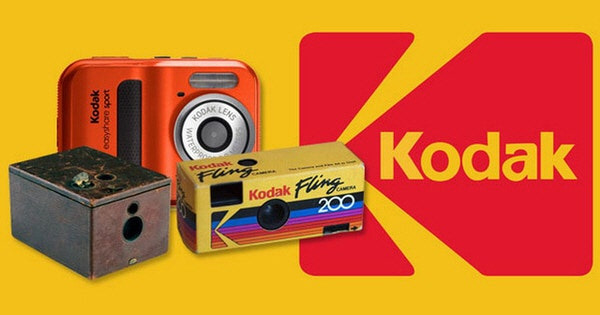
An even more tragic story unfolded at Kodak. Shockingly, the world’s first digital camera was invented in 1975 by Kodak engineer Steve Sasson. It was bulky and primitive but clearly the future. Yet Kodak’s management was terrified. Instead of embracing it, they buried the invention. Kodak’s profits came from film and photo paper sales, their golden goose. The digital camera threatened to kill that. Kodak’s executives fell victim to two powerful psychological biases. First, status quo bias: they wanted to believe their successful business model would last forever. Second, the sunk cost fallacy: billions invested in film factories and chemical technology made them refuse to switch to new technology. They lost everything trying to preserve past glory. This was not a failure of technology but a catastrophic failure of human psychology.
The Paradox of “Honesty Is the Worst Policy”: JC Penney’s Self-Destruction
Story 3: JC Penney’s ‘Fair and Square’ Pricing Policy
In 2011, struggling American department store JC Penney hired Ron Johnson, the mastermind behind Apple Store’s success, as CEO. His diagnosis was logical: “Constant discounts and endless coupons are fake prices that deceive customers. Let’s be honest with a ‘Fair and Square’ everyday low price policy.” He believed customers were rational ‘Homo Economicus.’ But the result was a disaster. Sales dropped 25% in one year, and the company lost nearly $1 billion. Johnson was fired after 17 months. What went wrong? He ignored fundamental principles of human psychology.
- Loss of Anchors: Buying a $100 product for $50 feels very different from buying a product priced at $50 from the start. Without the high ‘regular price’ anchor, the ‘fair’ price no longer felt like a bargain. Customers lost the thrill of winning a discount.
- Backlash of Loss Aversion: Customers felt the pain of losing coupons and sales events more than the gain of fair prices.
- Loss of the Game: Johnson didn’t realize he was selling not just clothes but the enjoyable ‘game’ of getting good products cheaply. Removing the game drove customers away.
When Nudges Aren’t Enough: Limits of Soft Interventions
Story 4: The Failure of COVID-19 Vaccine Lotteries
Behavioral economics insights led to ‘nudges’—soft interventions to steer behavior positively. But nudges are not cure-alls. During the COVID-19 pandemic, many governments introduced vaccine lotteries to boost vaccination rates. The results were disappointing. Simple nudges like text reminders slightly encouraged those already willing but failed to move those deeply distrustful or opposed. Nudges weren’t strong enough to overcome deep-seated beliefs or distrust.
Story 5: The Ghost Train, Yongin Light Rail
South Korea’s Yongin Light Rail project is a textbook public sector failure showing how poor planning causes disaster. Initial forecasts predicted 161,000 daily riders, but actual ridership after opening was only 9,000. This wasn’t a simple miscalculation. Political motives and excessive optimism (planning fallacy) led to unrealistic demand forecasts. Once started, the massive project became a ghost train no one could stop due to huge ‘sunk costs.’ Such fundamental design flaws cannot be fixed by small nudges.
These failures reveal an important truth: major corporate and government failures often result not from a single bad decision but from a chain of psychological biases. They start with overconfidence bias, proceed through confirmation bias (seeking only supporting information), and end in the tragic quicksand of sunk costs.
Advertisement
Part 5: Nudges That Move the World (Like It or Not)
If failures sound warnings, success stories show behavioral economics’ positive power.
Benevolent Influence: Innovations in Public Policy
- Save More Tomorrow: This amazing retirement savings program cleverly uses human inertia and loss aversion. It switches enrollment from ‘opt-in’ to ‘automatic enrollment’ (default setting) and links savings increases to future ‘pay raises.’ People dramatically increased savings without feeling a pay cut. After implementation, savings rates nearly tripled.
- Organ Donation and Tax Compliance: Changing organ donation to an ‘opt-out’ system caused donation rates to soar. Also, tax compliance improved significantly when threatening language was replaced with social proof messages like “9 out of 10 people in your area pay taxes on time.”
The Marketer’s Toolbox: Techniques That Tempt Consumers
Companies have long instinctively used behavioral economics principles. Now we know their secrets and can become wiser consumers.
| Behavioral Economics Concept | Psychological Principle | Marketing Example |
|---|---|---|
| Anchoring | Initial information dominates later judgments. | Showing a high ‘regular price’ alongside a ‘discounted price’ to make the discount look bigger. |
| Loss Aversion | Pain of losing outweighs pleasure of gaining. | “Limited time offer! Don’t miss out!” or countdown timers create fear of missing out. |
| Decoy Effect | Adding a clearly inferior third option makes a particular product more attractive. | Adding a medium popcorn priced close to the large makes the large seem like a better deal. |
| Social Proof | People follow others’ behavior. | “Bestseller” tags, customer reviews, “15 people are viewing this product now.” |
| Scarcity | Rare things seem more valuable. | “Only 2 left in stock!” or “Today only!” urges immediate purchase. |
Money and Emotion: Behavioral Finance
Traditional finance assumes perfectly efficient markets, but behavioral finance explains how investors’ psychological biases create bubbles and crashes. A key example is the ‘Disposition Effect,’ perfectly explained by prospect theory. Investors sell winning stocks (gains) too quickly due to ‘risk aversion’ to lock in profits, but hold losing stocks too long due to ‘risk seeking’ in hopes of recovery, avoiding the pain of realizing losses.
Part 6: Becoming the CEO of Your Brain: Practical Guide for Better Decisions
We cannot change our brain’s default settings, but we can recognize biases and build systems to counter them. This is your personal ‘choice architecture.’
Strategies to Overcome Biases
- Fighting sunk costs: Ask yourself, “If I were starting this today, knowing what I know now, would I invest this time, money, and emotion?” If no, cut your losses.
- Fighting anchors: When negotiating, try to make the first offer. If you can’t, consciously ignore the other party’s initial number and restart based on your research.
- Fighting framing: When faced with a choice, actively reframe it. If told “90% success rate,” ask, “What does a 10% failure rate look like?” Consider both gains and losses.
- Fighting overconfidence: Conduct a ‘pre-mortem.’ Imagine your project has failed miserably a year from now and list all possible reasons. This reveals hidden risks.
- Resolving planner/doer conflict: Use ‘commitment devices.’ For saving, set up automatic transfers on payday. For exercise, book classes with friends to leverage social commitment.
Your Personal Bias-Buster Checklist
Before important decisions, use this checklist to check your brain.
| Ask Yourself… | Bias You’re Fighting |
|---|---|
| 1. What was the first number or information I heard? Am I giving it too much weight? | Anchoring |
| 2. Am I focusing more on what I might lose than what I might gain? How would this look if framed differently? | Loss Aversion & Framing |
| 3. Am I continuing because of time or money already spent? | Sunk Cost Fallacy |
| 4. Am I only seeking information that confirms what I already believe? What’s the strongest counterargument? | Confirmation Bias |
| 5. Am I choosing this just because everyone else is? Does it really fit my personal goals? | Social Proof / Herd Behavior |
| 6. What does my ‘planner’ want me to do? How can I make long-term choices easier to do ‘right now’? | Present Bias / Self-Control |
Conclusion: You Are Predictably Irrational—and That’s Your Superpower
The behavioral economics revolution of recent decades has revealed an important truth. We are neither perfectly rational robots nor unpredictably erratic beings. Our irrationality follows systematic and predictable patterns.
This is not bad news. It’s a tremendous power. Understanding how the system works is the first step to hacking it. Knowing your brain’s default settings means you can design better systems for yourself and recognize when others try to exploit those settings.
Next time you see a ‘70% off’ sign, agonize over a losing stock, or force yourself to finish bad food because you don’t want to waste money, smile. You are not broken. You are human. And now, you know the rules of the game.